

On
Wednesday 17th after the overnight rain, it was as they feared, the men could find no tracks, and searched fruitlessly all day.
(FROM THE HAMILTON SPECTATOR, AUG. 21)
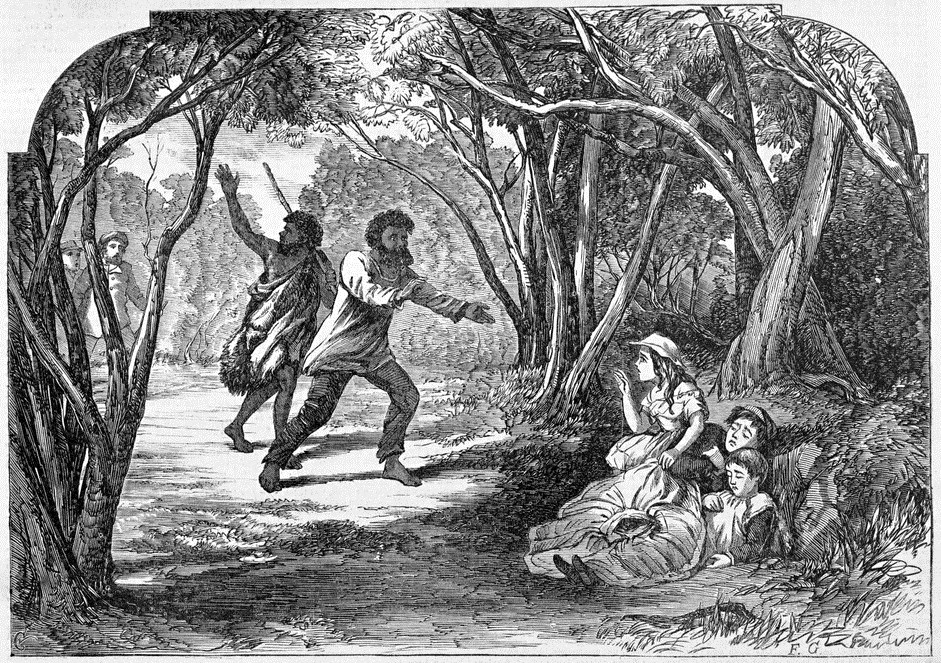
One of the most heart-rending occurrences which has ever happened in this district, has taken place within the last few days in the neighbourhood of Harrow, by which it is feared, indeed deemed nearly certain, that the lives of three young children have been sacrificed under most touching and melancholy circumstances. On the morning of Friday, the 12th inst., the children in question, aged from five to nine years, belonging to a carpenter named Duff, a steady, respectable man engaged in his trade at the Spring-hill Station, belonging to Messrs. Dugald Smith and Co., situated between Harrow and Apsley, started from their home to go to a hill a short distance away, to cut heath to make brooms. They had been in the habit of doing this before, and no apprehensions were entertained of danger. It was ten o'clock in the morning when they left, and they were expected back early in the afternoon. The hours passed away, however, without their making their appearance, and a little before sundown, they being still absent, the father started off in search of them. He reached the heath where they were supposed to be, but found them not. He searched for several hours, but, full of apprehensions for their safety, he was compelled to relinquish his search and return home. Early the following morning, the alarm was given. All the men on the station turned out, and every possible assistance from the neighbouring stations of Messrs. Affleck, Wilson, and Sinclair was given. During Saturday and Sunday there was no less than thirty-six men on horseback searching in the most systematic manner. The largest party of these was under the direction of Mr. Andrews, residing on the Spring-hill Station, to whom we are indebted for these particulars. But it would seem that a smaller party first struck upon the tracks of the poor little wanderers. From these tracks it was found how they had got lost. It was evident that they had been tempted to go to a heath situated some distance farther away from their home than the one usually frequented by them. This heath they had reached, but on leaving it, probably late in the afternoon, they had started in a directly opposite direction to that in which, their home lay. They had gone due north, until intercepted by a fence, when, apparently, quite puzzled, they had wandered off in a north-easterly direction. The ground was very sandy, so that their footprints were plainly discernible. The brush was composed almost entirely of mallee scrub and heath, being in some places of a dense and almost impenetrable nature. When once the tracks were hit upon, they were followed up with the utmost possible energy. Unfortunately, no black fellows could be got to assist in the search, but some experienced bush hands were among the party, and the track was keenly pursued. For thirty miles through the dense scrub the track was followed, the footsteps of the little children being more or less discernible in the sand. The sufferings of that poor trio will, as far as human foresight goes, never be known, but it will require little experience of colonial life to understand how great they must have been. Of food, they could have had absolutely none. There are no yams there, and although there are a few quondongs on the stunted trees, they are too bitter to be eaten, and would furnish no nutriment whatever. The youngest child appears to have been first knocked up, for after a time the three pairs of feet are reduced to two, the smallest being evidently carried by the others in turn, for here and there the footprints of the three are again seen. Once the searchers came upon a little pair of socks, which had been thrown away, probably to give ease to the sore and blistered feet of one of the lost ones. It was surprising for how long a time they must have wandered on without stopping, for, in a space of many miles, they had only stopped once, when they sought shelter under a small bush, and had lain down, most likely for a night's shelter. As we have said, the track was followed for thirty miles, and the men were still on it on Tuesday night, when it was so fresh that the most experienced of the party thought it to be no more than five hours old, and it was concluded that the children were only a short distance ahead. However, to follow the tracks in the dark was impossible, the horses were quite knocked up, so it was determined to camp on the tracks, and it was hoped that the search would be continued with vigour and success in the morning. These hopes, alas! were doomed to disappointment. During the night there was a succession of heavy showers, and when the morning broke, it was found that every vestige of the track had been washed away. The search was continued with undiminished assiduity but no vestige or track could be discovered, and it was at length relinquished, when all hope was given up that the poor lost ones were alive. The melancholy bereavement has had a sad effect on the father and mother, and the affair has thrown a gloom over the whole neighbourhood. The eldest child was a boy, aged nine ; the second, a girl, of seven ; and the youngest, a boy, only five years of age.
***
This day marks the last information from the 'Hamilton Spectator' correspondent, who evidently returned home to file his story. The article was syndicated to a number of newspapers including 'The Argus' in Melbourne, and has since been reproduced at various times due to its melancholy outlook, seen as priming the readers for the next chapter of the story where they anticipated having to inform the readers that the children were dead. The article is below
The Argus Saturday 27th August 1864
LOSS AND APPREHENDED DEATH OF THREE CHILDREN.(FROM THE HAMILTON SPECTATOR, AUG. 21)
One of the most heart-rending occurrences which has ever happened in this district, has taken place within the last few days in the neighbourhood of Harrow, by which it is feared, indeed deemed nearly certain, that the lives of three young children have been sacrificed under most touching and melancholy circumstances. On the morning of Friday, the 12th inst., the children in question, aged from five to nine years, belonging to a carpenter named Duff, a steady, respectable man engaged in his trade at the Spring-hill Station, belonging to Messrs. Dugald Smith and Co., situated between Harrow and Apsley, started from their home to go to a hill a short distance away, to cut heath to make brooms. They had been in the habit of doing this before, and no apprehensions were entertained of danger. It was ten o'clock in the morning when they left, and they were expected back early in the afternoon. The hours passed away, however, without their making their appearance, and a little before sundown, they being still absent, the father started off in search of them. He reached the heath where they were supposed to be, but found them not. He searched for several hours, but, full of apprehensions for their safety, he was compelled to relinquish his search and return home. Early the following morning, the alarm was given. All the men on the station turned out, and every possible assistance from the neighbouring stations of Messrs. Affleck, Wilson, and Sinclair was given. During Saturday and Sunday there was no less than thirty-six men on horseback searching in the most systematic manner. The largest party of these was under the direction of Mr. Andrews, residing on the Spring-hill Station, to whom we are indebted for these particulars. But it would seem that a smaller party first struck upon the tracks of the poor little wanderers. From these tracks it was found how they had got lost. It was evident that they had been tempted to go to a heath situated some distance farther away from their home than the one usually frequented by them. This heath they had reached, but on leaving it, probably late in the afternoon, they had started in a directly opposite direction to that in which, their home lay. They had gone due north, until intercepted by a fence, when, apparently, quite puzzled, they had wandered off in a north-easterly direction. The ground was very sandy, so that their footprints were plainly discernible. The brush was composed almost entirely of mallee scrub and heath, being in some places of a dense and almost impenetrable nature. When once the tracks were hit upon, they were followed up with the utmost possible energy. Unfortunately, no black fellows could be got to assist in the search, but some experienced bush hands were among the party, and the track was keenly pursued. For thirty miles through the dense scrub the track was followed, the footsteps of the little children being more or less discernible in the sand. The sufferings of that poor trio will, as far as human foresight goes, never be known, but it will require little experience of colonial life to understand how great they must have been. Of food, they could have had absolutely none. There are no yams there, and although there are a few quondongs on the stunted trees, they are too bitter to be eaten, and would furnish no nutriment whatever. The youngest child appears to have been first knocked up, for after a time the three pairs of feet are reduced to two, the smallest being evidently carried by the others in turn, for here and there the footprints of the three are again seen. Once the searchers came upon a little pair of socks, which had been thrown away, probably to give ease to the sore and blistered feet of one of the lost ones. It was surprising for how long a time they must have wandered on without stopping, for, in a space of many miles, they had only stopped once, when they sought shelter under a small bush, and had lain down, most likely for a night's shelter. As we have said, the track was followed for thirty miles, and the men were still on it on Tuesday night, when it was so fresh that the most experienced of the party thought it to be no more than five hours old, and it was concluded that the children were only a short distance ahead. However, to follow the tracks in the dark was impossible, the horses were quite knocked up, so it was determined to camp on the tracks, and it was hoped that the search would be continued with vigour and success in the morning. These hopes, alas! were doomed to disappointment. During the night there was a succession of heavy showers, and when the morning broke, it was found that every vestige of the track had been washed away. The search was continued with undiminished assiduity but no vestige or track could be discovered, and it was at length relinquished, when all hope was given up that the poor lost ones were alive. The melancholy bereavement has had a sad effect on the father and mother, and the affair has thrown a gloom over the whole neighbourhood. The eldest child was a boy, aged nine ; the second, a girl, of seven ; and the youngest, a boy, only five years of age.
END.



.JPG)