This blog provides information, stories, links and events relating to and promoting the history of the Wimmera district.
Any additional information, via Comments, is welcomed.


Showing posts with label hospitals. Show all posts

Thursday, 23 August 2018

Michael's Hell Ship

For more than a century and a half, a grim tale has passed down through Michael Veitch's family: the story of the “Ticonderoga”, a clipper ship that sailed on a calamitous voyage from Liverpool for Victoria in August 1852.Crammed on board in cramped, overcrowded conditions, often without sanitary facilities, fresh water and barely enough food, were 800 poor but hopeful emigrants- mostly Scottish victims of the Clearances and the potato famine. A better life, they believed, awaited them in Australia.

Three months later, a ghost ship struggled into Port Phillip Bay flying the dreaded yellow flag of contagion. On her horrific three-month long nightmare voyage, deadly typhus had erupted, killing a quarter (nearly 200) of Ticonderoga's passengers and leaving many more desperately ill. Sharks, it was said, had followed her passage as the victims were buried at sea. 
The plague-stricken sailing ship struck panic in Melbourne. Forbidden to dock at the gold-boom town, the ship was directed to a lonely beach on the far tip of the Mornington Peninsula, a place now called Ticonderoga Bay. 
The Quarantine Station administrative building
James William Henry Veitch was the ship's assistant surgeon, on his first appointment (and last) at sea. Among the volunteers who helped him tend to the sick and dying was a young woman from the island of Mull, Annie Morrison. What happened between them on that terrible voyage is a testament to human resilience, and to love.

Michael Veitch is their great-great-grandson, and the book “Hell Ship” is his brilliantly researched narrative of one of the biggest stories of its day, now all but forgotten. Broader than his own family's story, it brings to life the hardships and horrors endured by those who came by sea to seek a new life in Australia.

But there’s more...this story was repeatedly told to Michael all his young life by his own father, he has carried it and explored it all these years. 

You can hear the story directly from Michael in a performance at the Horsham Town Hall. Told with pieces of music from the era performed by Michael’s son, there will be the web of four generations of Veitch on stage. This is truly a family story.
Michael captures the human aspects in what is essentially a dark story. Even in a dying ship’s hull there is always some small thing that a wry sense of humour can find to lift us out of the putrid desolation that marks our history.
Michael Veitch’s story of the Ticonderoga delves into our Australian emigrant history, explores the themes of unimaginable courage, of family, and shines the light on a monumental, but almost forgotten, human story. This one, his own.

Upon the arrival of the “Ticonderoga” on the 22nd December 1852, a quarantine station was hastily erected at this site.  Sadly, a cemetery was also immediately required as of the 170 people that died due to Typhus Fever that engulfed the ship, 70 people were to perish upon their arrival to Port Phillip.
Heaton’s Monument marks the location of the original cemetery established at the quarantine station on Point Nepean. The cemetery was relocated inland around 1854, but the neo-Egyptian style sandstone memorial to the Ticonderoga Tragedy and to all those who endured the lengthy passage in migrant transport ships to Australia remains. 
George Heaton was the Supervisor responsible for building much of the Quarantine Station. It is believed that he built the monument at great expense to himself, in memory of the migrants who died.

DATE: 8th September 2018
TIME: 8pm
VENUE: Horsham Town Hall Theatre
DURATION: 70 minutes (no interval)
PRICE: $40 – Adult, $35 – Concession, $30 - 2018 Member, $25 - 2018 Member Concession.
Contact the Box Office on (03) 5382 9555.

Thursday, 26 July 2018

Melbourne comes to Stawell

All images by Abandoned Melbourne
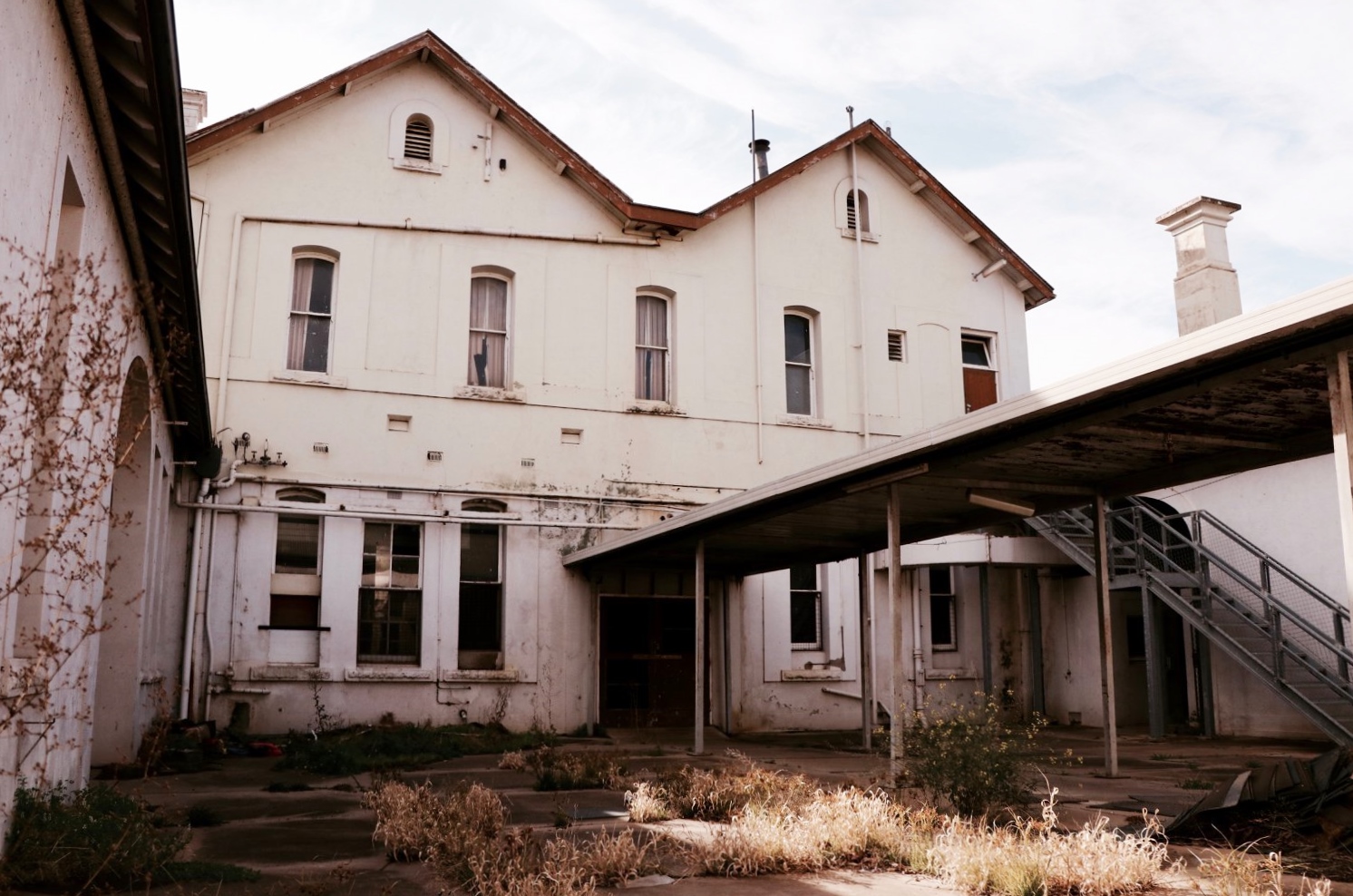
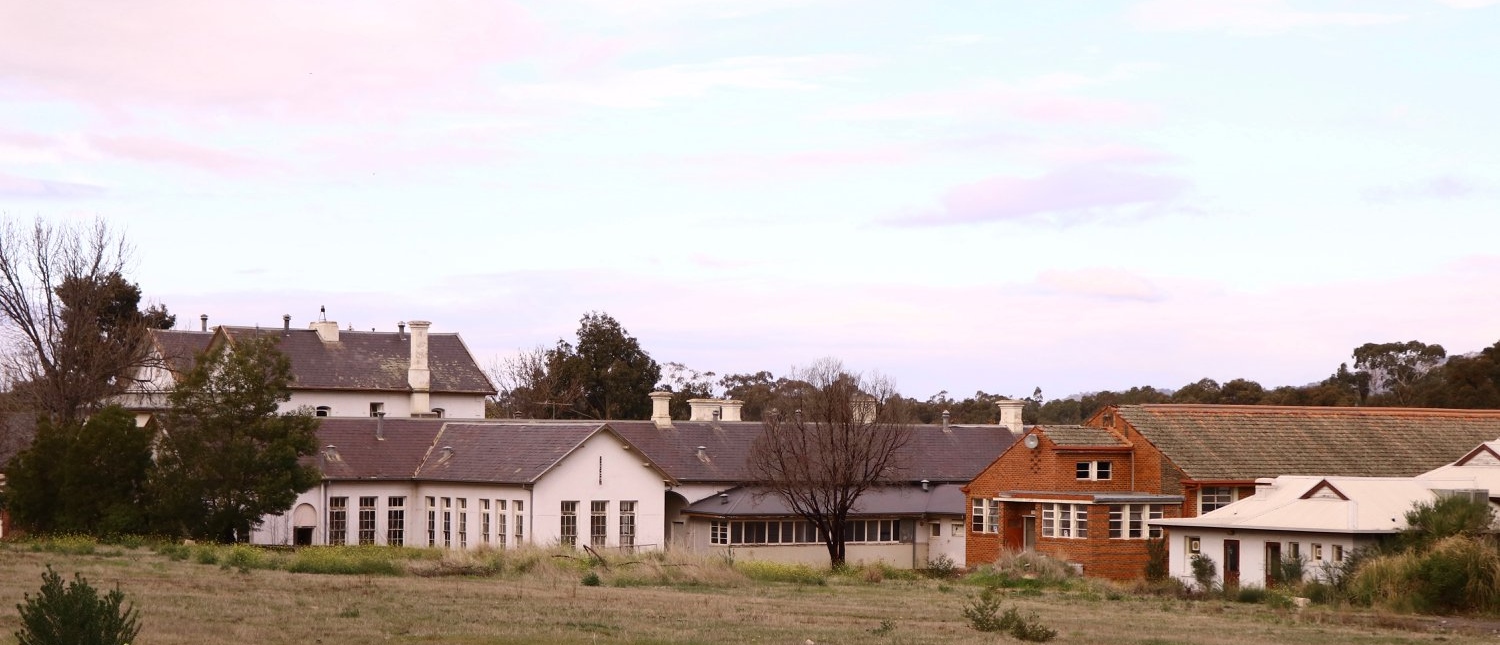
At the beginning of the month Abandoned Melbourne, (a Facebook page who visit & photograph derelict buildings & sites of general public interest, and share the images so you don't have to take the risks going to these places) obtained permission to record at Pleasant Creek in Stawell. Here are a sample of their images, and their history of the site.
Their images have created a time capsule of the site after its closure and before any re-development.
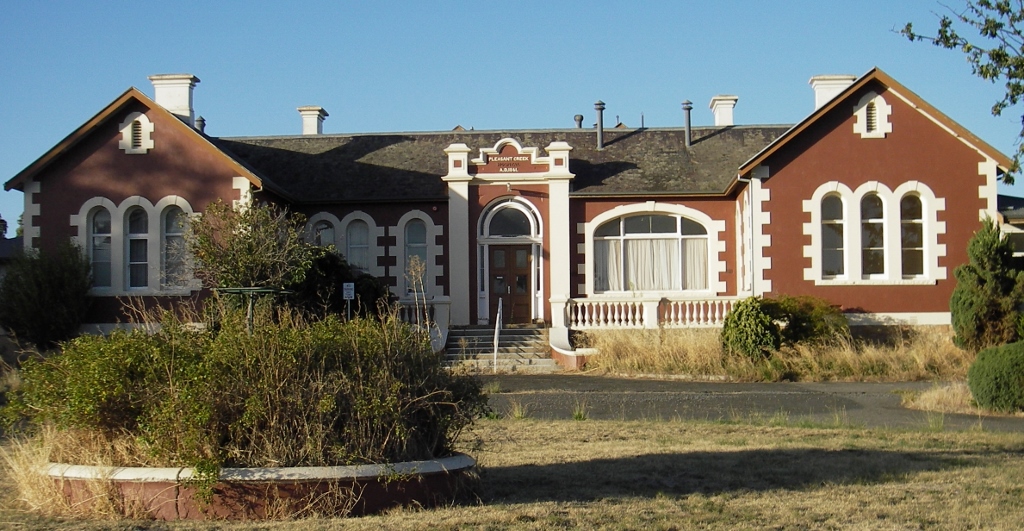
In 1861, the Pleasant Creek Hospital opened as a medical facility for the population of Stawell and district. The Syme Ward building for convalescent patients was added in 1904.
In 1933, the facility was replaced by a newly-built hospital in the town of Stawell. In 1934, the Mental Hygiene Department acquired the old Pleasant Creek Hospital site and converted it to accommodate children with disabilities, which became Pleasant Creek Special School. 
The first residents (18 boys) were admitted in 1937 from Royal Park Depot.
At the end of 1937, there were 98 children living at Pleasant Creek. In 1968 it was renamed Pleasant Creek Training Centre, caring for people with intellectual disabilities.
From the 1950s to the 1980s, there were several building developments:
1957, Lonsdale Unit expanded capacity to 113
1969, Bellfield and Fyans Units increased numbers to 196
1977, Alexandra Unit converted to recreational and lecture room facility.
1977, Day Centre, Nurses' Home and Clinical Services Administration buildings
1985, Nara Unit closed for renovations and residents moved to the previous staff living quarters.
Interior of the Lonsdale/Bellfield/Fyans unit.
During the 1980's, Pleasant Creek Training Centre housed up to 140 male and female residents, aged 10 to 45 with mild to profound levels of intellectual disability, in five residential units and four on-site houses. Services were aimed towards community repatriation. The Centre provided respite care to residents from the local community and used generic services from recreational to medical.
The Concert Hall
The Intellectually Disabled Persons' Services Act 1986 abandoned the previous ‘medical model’ that defined disabilities as illnesses, for a ‘care model’ based on the philosophy that the disabled should not be ‘warehoused’ in institutions, and care of intellectually disabled persons was reallocated to the Community Welfare Services Department.
In 1986, the Centre had about 160 residents, each client now had to be given opportunities to realise his or her full potential. General and individual service plans were created to direct each person’s development. 

In 1988, the report commissioned on Intellectual Disability Services recommended the dismantling of institutions for the disabled, to be replaced by smaller facilities. It recommended that Pleasant Creek be closed by 1993, which did not eventuate.
In 1990, an independent inquiry was ordered into allegations of sexual assault at Pleasant Creek. In response to the “Jude Wallace Report” (as it was known), Community Services Victoria and Pleasant Creek Training Centre developed mechanisms which lead to improved systems for the reporting of incidents & improved standards of service delivery.

 From 1990, Pleasant Creek provided residence, education and training facilities for 113 intellectually disabled people of varying ages from late teens to mid 50's.
In 1996, the Victorian government announced the impending closure of Pleasant Creek, in favour of 'community living' options for its residents, and the facility closed in 1999.
Thank you to Pleasant Creek for letting Abandoned Melbourne freely explore the hospital, and thanks too to Abandoned Melbourne for the visual record. Follow along on Pleasant Creek’s Facebook page to see the works being done and future dates for tours.The buildings are currently being cleaned up to be a business & tourism hub.
Then check out Abandoned Melbourne’s Facebook page, there are many more photographs on their Page, and they don’t just limit themselves to Melbourne (the Profile pic is at the Sister Rocks near Stawell).

Thursday, 21 September 2017

Pleasant Creek site

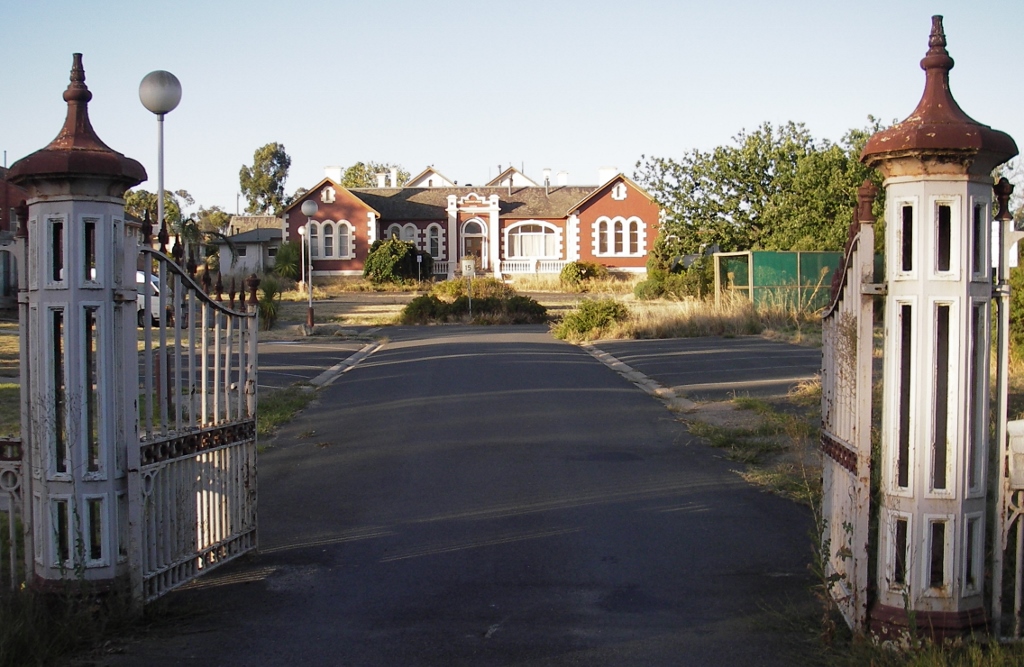
The Pleasant Creek Hospital site has finally been leased. New owner Keenan Quinsee intends to open some of the buildings for Aradale-style ghost tours. More details on the plans in the Wimmera Mail-Times article, and photos of the buildings in the Stawell Times-News article.


Pleasant Creek Centre was the site of the first local hospital in Stawell, which was opened in 1850 (the only hospital in western Victoria between the South Australian border, Ballarat and the Murray River. Local landowners and miners subscribed to its construction. It was reserved in 1861 and again in 1883. Part of the building remains on the site, there were more elaborate alterations in 1881, it featured a Benevolent Ward for elderly miners. The area has a long history of community use, initially as a health service and subsequently as the Pleasant Creek Training Centre, an area where people with intellectual disabilities were accommodated and educated and participated in day programs.

 For many years a school was located on the site as well as accommodation for children, teenagers and latter disabled adults. Following changes to intellectual disabled housing policies, the Human Services Department transferred the clients from the Pleasant Creek Centre into community housing.

Parliamentary legislation removed the final reservation on the land and the 13 hectares was identified as having no further public purpose and had been for public sale since 2008.

Wednesday, 1 June 2016

What nearly was

By chance, I happened to come across an entry in the Victorian Government Gazette referring to the Witchipool (Lake Buloke) Hospital,
And not just any hospital, this was for an infectious diseases hospital. 
The entry is for the 'site for a hospital or place for isolating persons suffering from small-pox, cholera, or other dangerous infectious or contagious disease'.
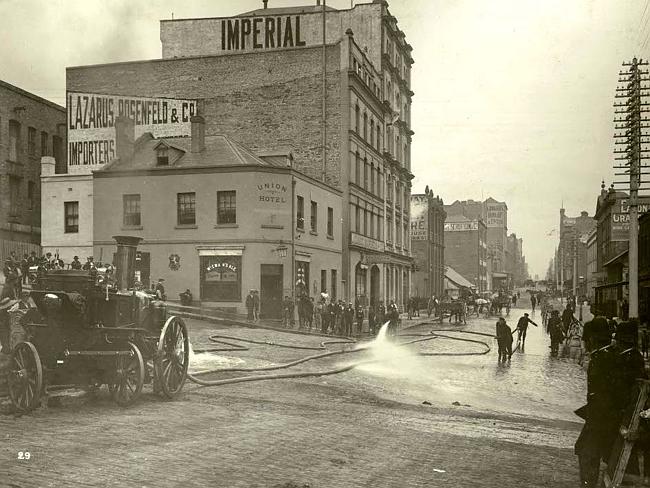
Why did the government of the day (in 1911) consider the need for a hospital? It was in 1900 that there was a major outbreak of bubonic plague in Sydney. It killed 103 people in 8 months and lead to the mass cleansing and demolition of slum housing in heavily populated areas like The Rocks. The Sydney event remains the most significant, but there were a further 12 major outbreaks eventuating in 1371 cases and 535 deaths in 27 locations, including Melbourne, around Australia between 1900 and 1925.
A street is hosed down in the mass cleansing in January 1900. State Library NSW
Witchipool is the name of the parish which encompasses Lake Buloke, Little Lake Buloke, part of the Donald township, west to Litchfield and north towards Massey. Witchipool is from the Aboriginal words for plant that grows on a hill. The farming district was originally named Litchfields.
 The Reservation of part of Allotment 12 temporarily set the land aside for the establishment of the hospital, but it never eventuated. The reservation was revoked in 1922.
It was a little concerning that they considered placing infectious patients between two water sources - the lake and the Richardson River. Typically for smallpox, if the patient survives the initial infection, they remain infectious for 3-4 weeks after the onset of the rash. Smallpox was declared globally eradicated in 1980.
Today, outbreaks of cholera still occasionally happen in northern Australia, and can be associated with algal blooms.

The area today
The 43 acre crescent-shaped site was situated away from centres of population, but still close to a railway and a highway. Would have made a wonderful abandoned building now.

Thursday, 17 March 2016

Institutions crumble

Two  Wimmera institutions crumbled and were reduced to rumble this week.
The Church of Christ before demolition begins
Firstly the Horsham Church of Christ building. The church has stood on the corner of Firebrace and Urquhart Streets since 1918, and over the past fortnight has slowly been demolished. Watched and mourned by many as another Horsham heritage building succumbed to the reactive soils and progress. 
The building with its square tiers, mock buttresses and tiled roof was extended in 1957, but was considered no longer suitable for the congregation and will move to River Road. The old site will become a child care centre and townhouses.
Going...the tiles removed
Going...the rear extension gone

Further north in Warracknabeal the old hospital building is being torn apart as some of the buildings make way for the new Rural Northwest Health redevelopment.
The Warracknabeal Hospital
More than $10 million will be spent to build a new acute care and community care area, and refurbishment of the Landt & Banksia sections.The hospital opened in March 1891, and has steadily grown since.