This blog provides information, stories, links and events relating to and promoting the history of the Wimmera district.
Any additional information, via Comments, is welcomed.


Friday, 24 July 2020

Location, location

A short film by Matthew Bird has captured a number local iconic locations around the Wimmera and Mallee.
'Parallaxis' is an abstract 16-minute psychological sci-fi film, with 2 'future characters' (played by Ashleigh McLellan and Lilian Steiner) who move across the landscape pushing & controlling large cylindrical instruments that survey & map the terrain.
Bosisto's Eucalyptus Distillery ruins
The terrain in question is recognisable as the site of Bosisto's eucalyptus distillery at Antwerp, the wind farm at Murra Warra, the Stick Shed at Murtoa, and Lake Tyrrell at Sea Lake.
Passageway, Stick Shed
The film follows two augmented humans as they "investigate their possible archaic genealogy in a Wimmera past. Arriving temporarily and somewhat unexpectedly in the now, the inquisitive duo put their surveillance face-halos to work: observing, recording, archiving ephemeral moments and navigational discoveries as they speed through the landscape. Their biomechanically engineered apparatus are cross-fed into the telemetry of the full-body gyrocompass each visitor operates. Systems in systems, wheels within wheels, spin-axis atop spin-axis, each revolution another attempt to locate and momentarily fix a collective bearing in space and time".

Friday, 10 July 2020

Ancestors Trove

Since words like “pandemic” and “coronavirus” became part of everyday parlance, Australians have sought solace in researching their family histories in increasing numbers.

Tapping into this desire to know more, the National Library of Australia announced a new series of Family History for Dummies online tutorials as the international and local shutdowns took effect. The NLA found the sessions booked out within minutes. Normally around 100 people sign up for online classes. In April, they had 356, and around a third of those lived in regional Australia.

Ancestry.com's main focus is on the internationally lucrative family history genre fuelled by such reality TV documentaries as ‘Who Do You Think You Are?’ (which ancestry.com sponsors). They said during April & May there was a 78% increase in the use of the word "ancestry" across Facebook, Twitter & other social media.

It does show there has been this massive shift during lockdown of Australians keen to find out more about their own families. Time spent 'in iso' with little else to do, is clearly a factor.

The stereotype is that family history is something you do when you’ve retired, but a personal interest in family history can also be inspired by certain life events -  the birth of a child, death of a parent or another close loved one.

Researching your own family history has never been easier or more accessible. Cemetery records, gravestones, birth certificates — you can find so much now at home on a computer.

Administered by the National Library of Australia, Trove should be considered as a starting point. It celebrated its 10th birthday at the end of June with a much-improved, user-friendly redesign.

Described as ‘Australia’s online cultural and research portal’, it is really the free go-to-shop for anyone interested in finding out a particular fact about Australia’s past, be that in newspapers on a photo, listed in a gazette...

The new version contains 6.4 billion records of Australian history, culture and research, painstakingly gleaned from 140 other libraries, museums, archives and media organisations.

However, the updated Trove is more accessible than ever, particularly for Indigenous Australians, with more than 200 Indigenous languages on the site and a filter which prevents anyone from seeing culturally disturbing photos or documents without clicking approval.

There are a lot of lessons to be learned by looking at the lives of our ancestors during an epidemic or pandemic.

Based on The Age article: Pandemic prompts growth in familytree digging


Friday, 12 June 2020

Lizzie's dreads

The ABC have posted an old Landline segment on 'Big Lizzie'.


Big Lizzie was built by Frank Bottrill, in Richmond, in 1915, with a 60hp Blackstone water-cooled crude oil engine and fitted with Bottrill's Dreadnought wheel, patented in 1906. Lizzie worked in the Mallee clearing fruit blocks, and traveled down through the Wimmera to Glendinning near Balmoral in 1924.
There she ended her days on a share-farm, pieces sold off and forgotten.
Then in the 1970s came the task of finding the fate of the huge chunk of machinery, and returning it to the Mallee and to Red Cliffs.

Saturday, 25 April 2020

Photos telling their story

Time to resurrect Way Back When. This one comes from researching Asylum Records - the Victorian Asylum Records for 1853-1940. The records are from PROV (Public Record Office Victoria) and are now available via Ancestry (which makes for easier searching).
In general, the patient records include:
  • the patient’s name
  • the dates of their admission and discharge
  • spouse’s name and profession
  • who and why patient was admitted
  • basic details of their history (age, place of birth, current residence)
  • details of their illness or disability
  • patient case books (one page or more of notes on patient)
  • date of death  (if they died in the asylum)
  • some records include a photo (many don’t).
  • Admission warrants 
  • Patient registers 
PROV has this statement: The language used in these records can be distressing or offensive.  The terms used to describe health (e.g. ‘lunatic’) reflect the attitudes of the time and may not represent current day understandings. and it is not only the language, but the reports themselves that may not represent current day understandings. Looking back, we can use more modern interpretation of symptoms and the diagnosis on some who were "cured" only to be re-admitted at a later date with worse or more advanced illness. Many of these were long before terms like post-natal depression were invented.

The patient record that quiped my interest was one from Ararat, the Aradale Asylum. It had photos! As they say a picture is worth a 1,000 words, this one or all three speak to you.
The January 1908 admission photo is of a 27 year old who was admitted suffering sun-stroke. He was discharged 10 months later, healthier and cured (very few Discharges have photos). However he was re-admitted 2½ years later in May 1911, still apparently with the same suit but looking drawn. The record for the re-admission is very brief and it looks like he was released after just 12 days.
Aradale
Like the prison or criminal record photos, these asylum photographs serve to portray these people as 'real people'.

Tuesday, 30 July 2019

Finding Jane's flowers

It is 155 years since the Duff children - Isaac, Jane, and Frank - were lost in the bush at Nurcoung.
The Library is commemorating the anniversary in a number of ways.

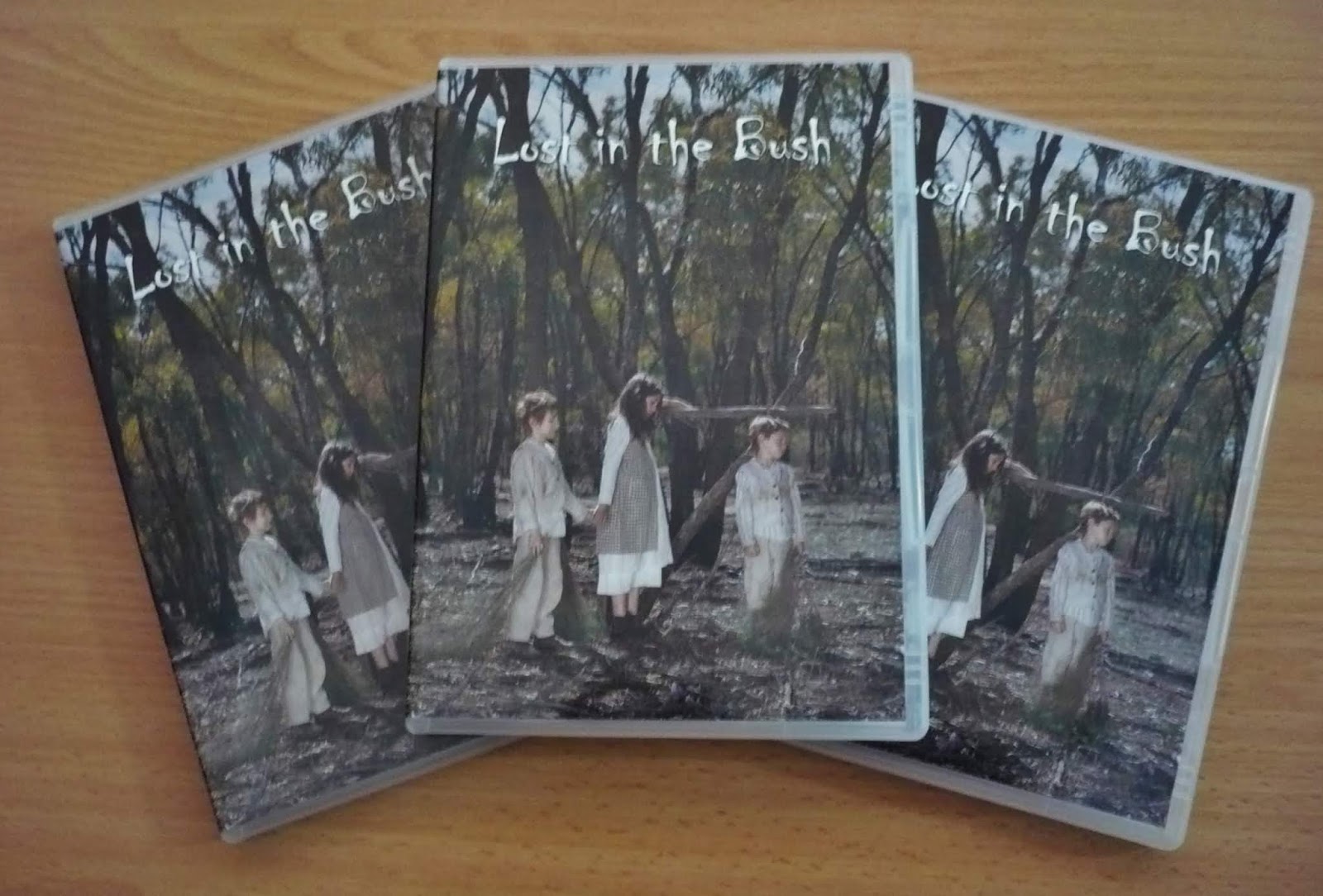
Firstly it has organised a further batch of the 'Lost in the bush' DVD. Copies of this DVD, of the 1970s film, quickly ran out after the 150th celebrations, and these DVDs will be the last produced.
Secondly the Library has produced a booklet "Lost in the bush : day by day" which as the title suggests is a day by day account of what happened on each of the 9 days.

And finally the Library is conducting a special event "Finding Jane;'s flowers : the role of plants in the 'Lost in the bush' story". Locals will show and talk about some of the plants endemic to the area, plants the children would have encountered. The talk will also discuss life and stories of the bush around the Nurcoung district.
"Finding Jane's flowers" will be held at the Goroke Library, 30 Main St Goroke on Thursday 15th August at 2:00pm, and will include afternoon tea. There will be copies of the DVD and booklet available for sale. The event is free and bookings are essential. Go to the library's website and follow the "Finding Jane's flowers" link.

Tuesday, 16 July 2019

To be sure

With such a large ancestry from the Emerald Isle, researching your Irish family heritage is part of many a family history.
The Genealogical Society of Victoria are conducting "Beginning your Irish family history"
The presenters are Maureen Doyle and Beryl O'Gorman.
Topic covered will include BDMs,census & other substitutes, and land records. 
The session is on Thursday 15th August from 10:30am to 1:00pm, at Level 6, Queen St in Melbourne.
Costs for GSV members: $30, RHSV/CAV/FHC members: $45, Non-members: $60.
Books are essential. Contacts Phone: 9662 4455 Email: gsv@gsv.org.au Website: www.gsv.org.au

Wednesday, 26 June 2019

B.D.Ms

Records of births, marriages and deaths can provide unique insight into your family history and identity.
Effective 1 July 2018, the Victorian Registry of Births, Deaths & Marriages will reduce the price of their historical images from $33.00 to $24.50.

The historical index holds these life events registered in Victoria.
Life event From To
Births 1853 100 years before today's date
Marriages and relationships 1853 60 years before today's date
Deaths 1853 30 years before today's date
Church baptisms, marriages and burials 1836 1853

An 'Uncertified historical certificate' is a scanned image of the original, often handwritten, record that you can download.Great for family history purposes, but if you require a Certificate for official purposes you'll need a physical printed certificate that the Registry mail out to you.

Monday, 8 April 2019

Cataloguing for collections

Always wanted to be a cataloguer, but didn't know how?
Have a historic collection, but no idea on how to organise it? 


Then the 'Victorian Collections Cataloguing Workshop' is aimed at you. 

This hands-on workshop provides an introduction to the principles of digitisation and collection management. Participants will learn how to catalogue collection items using the free, online and custom-built Victorian Collections cataloguing system. 

Check out the Victorian Collections website to see what has already been added to their catalogue, and some of the stories they have collected.

Victorian Collections workshops offer a relaxed and open environment and cater for participants with any degree of museum and computer literacy, as well as ongoing cataloguing support for community museums, and small and medium collections.

Date: Wednesday 8th May 2019.
Time: 10am to 3:00pm.
Venue: Horsham Library, Mibus Centre, 28 McLachlan Street, Horsham
Cost: Members $10.00 Non-members $20.00
Further information contact: 1800 680 082 (Australian Museums & Galleries Assoc.)
 

Saturday, 6 April 2019

Stick Shed by drone

Some great video of the Stick Shed by the ABC Western Victoria crew.
 
(Video from ABC Western Victoria's Facebook page)
The Murtoa Stick Shed is a National Heritage listed building (Australia's 101st), constructed in the 1940’s to store grain. It is now in high demand by tourists who want to see this iconic building.
Originally it only re-opened for the Murtoa Big Weekend in October each year, then once a month, now it is open 6 days per week!
Tourists are coupling the Stick Shed with the Silo Art Trail.
Opening times are: Tuesday-Saturday 10am to 12:30pm and Sunday 10am to 2pm.