This blog provides information, stories, links and events relating to and promoting the history of the Wimmera district.
Any additional information, via Comments, is welcomed.


Showing posts with label National Archives. Show all posts

Thursday, 20 July 2017

Family history on the land

 
State Library of Victoria is hosting its 14th annual Family History Feast during the National Family History Month. 

Enjoy free information sessions on a range of subjects based on this year’s theme, and learn how Victorian government agencies can help family historians. 

This year’s program is of special interest to country people, as it is on researching maps and land records.

The Program begins at 9.30am when the doors open

10–10.05am
Welcome
Kate Torney, Chief Executive Officer, State Library Victoria

10.05–11am
Exploring Koorie history and genealogy
John Patten, Manager Bunjilaka Aboriginal Cultural Centre, Museums Victoria

11–11.45am
Overview of Public Record Office Victoria land records
Charlie Farrugia, Senior Collections Advisor, Public Record Office Victoria  

11.45am–12.05pm
Care and preservation of your family history collection
Conservation staff, State Library Victoria

12.05–1pm
Break

1–1.45pm
Farmland and manor houses to air fields and hospitals: military property acquisition during WWII
Terrie Page, Assistant Director Access and Communication, Victorian State Office, National Archives of Australia 

1.45–2.15pm
From cattle yards to war workers: the plan collection of Bendigo Regional Archives Centre
Dr Michele Matthews, Archives Officer, Bendigo Regional Archives Centre

2.15–3pm
Family history on the map
Sarah Ryan, Coordinator Map Collection, State Library Victoria

3–4pm
2017 Don Grant Memorial Lecture – Families and land: land settlement and the role of families, Victoria 1870–1940
Dr Charles Fahey, Convener History Program, Department of Archaeology and History, La Trobe University
Introduced by Jan Parker, President, Victorian Association of Family History Organisations (VAFHO)


Enjoy free information sessions on a range of subjects based on this year’s theme, and learn how Victorian government agencies can help family historians.

Family history feast is on Monday 21st August 2017 from 10:00 am to 4:00 pm

Entry is via Door 3 of the State Library of Victoria, 328 Swanston St, Melbourne.

The sessions are free, but bookings are essential. You can book online, Phone: 03 8664 7099 or Email: inquiries@slv.vic.gov.au


Friday, 20 May 2016

Photos on a National theme

Having a look at the National Archives of Australia's online PhotoSearch facility.
Naturally while there are many of Canberra and politicians portraits, there are a number or local or semi-local photographs.

Dimboola goes to Dimboola
 Including this now historic one of the now demolished Dimboola Hotel. Taken in 1974 it shows a  bus carrying Canberra Professional Groups' cast of the play "Dimboola" outside the Dimboola hotel. The geotag says in Lochiel Street, but it would be in Lloyd Street.
Telephonists at the Hopetoun Post Office (undated)

As a national organisation, (the Commonwealth Lighthouse Service regularly visited and serviced the Lighthouses) there is a range of lighthouses & beacons, some recent like this one of Maatsuyker Island lighthouse off Tasmania's south coast taken in 1978
Or this one of riding cable trolley tramway up from the jetty to Maatsuyker Island lighthouse in 1956.

And history in the making - the surveying of Canberra in 1912.
Then later, the site of the New Parliament House. This largely pastoral photo was taken in 1972.
Still on the political theme - Prime Minister of Australia - Robert Gordon Menzies in 1960.

The Horsham East Post Office Agency (the Dooen Road shops) undated but probably in the late 60s or early 70s by the advertising.
 A wonderful way to while-away some time reminiscing.

Thursday, 19 November 2015

From Horsham to see the King

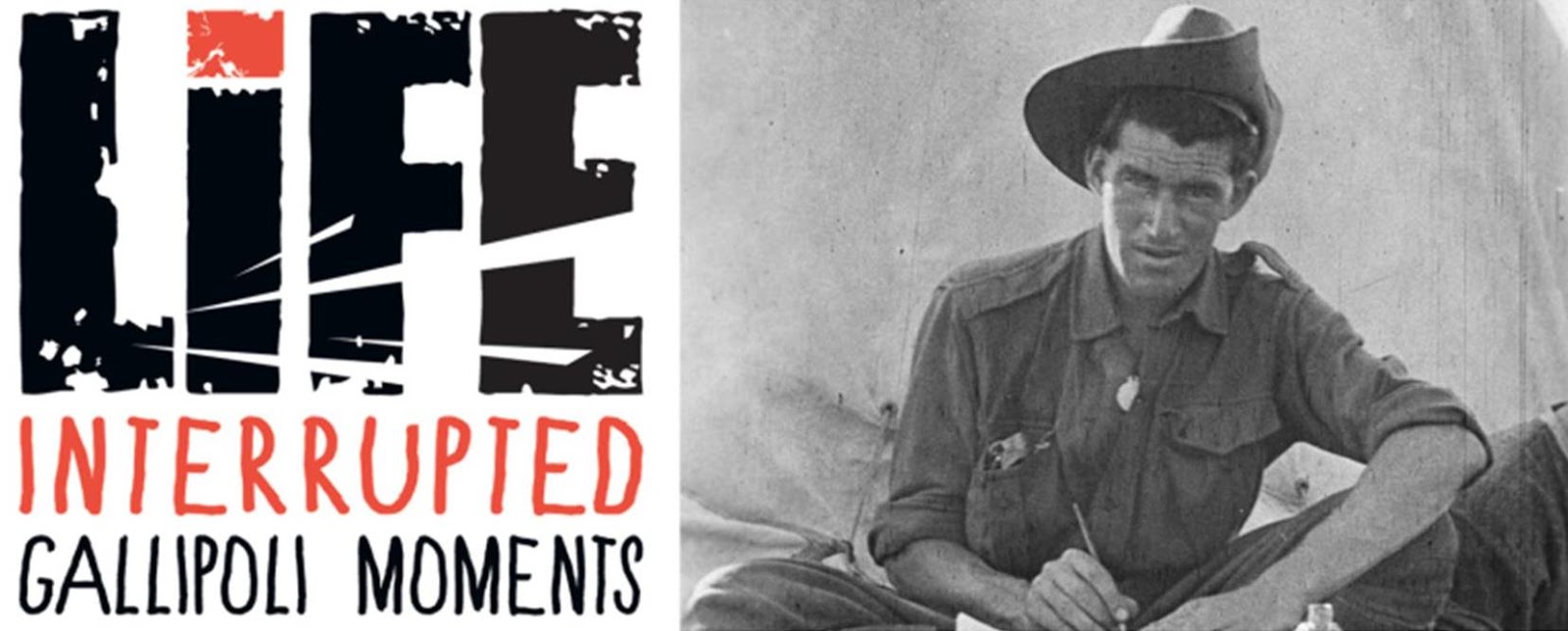
At the National Archives of Australia in Canberra, to view the “Life interrupted -Gallipoli Moments : stories of our soldiers at Gallipoli – in their own words".
The exhibition allowed you to embark on a journey with the soldiers at Gallipoli. From the excitement of enlisting, to the reality and terror of battle. Original diaries, photos and personal letters, give a glimpse of the Gallipoli campaign through the eyes, and in the words, of those who were there.
The material from the State Library of New South Wales reveals captivating personal experiences of servicemen and nurses. Service records from the National Archives remind us that everyone was a volunteer, and they came from all walks of life to serve their country. 
King's Threatre poster (NAA exhibition)
Amongst all the photos and extracts was a threate poster >> and staring out from it was the word Horsham.
One of the members of the Anzac Coves was J.Davey a baritone from Horsham, Vic.
Jack Leslie Davey was a member of the Hospital Transport Corps from May 1915 to September 1918. He embarked on 17 July 1915 on the HMAT Orsova from Melbourne. Aged 24 he had been a storekeeper, his father John lived in Baillie Street in Horsham.
The “Anzac Coves” was an Australian Pierrot entertainment troupe, consisting entirely of soldiers. Established after the Gallipoli Campaign, they performed in many places on the Western Front – in barns and sheds, often just behind the trenches.
With a lively sense of humour, the troupe satirised military life. The Coves were so popular they toured Britain in 1918.
The Coves had played in the King's, Court and Ambassadors theatres, and at Buckingham Palace before the King and Queen and the Prince of Wales.
An informal photo of the troupe in uniform (NAA exhibition)
Below is a studio group portrait photograph of the troupe taken in London, from April 1918 "'The Anzac Coves', 1st Australian Headquarters Pierrot Troupe. Direct from the firing line ‘Somewhere in France’”. This concert party was to perform from 29 April 1918 at King's Theatre, Hammersmith, with proceeds to go to the Australian Repatriation Fund for Discharged Soldiers.


Third row, left to right: unidentified; unidentified; Harry Ross (tenor); unidentified; 7461 Private (Pte) Benjamin Joseph Davies (second tenor); unidentified. Second row: 6313 Pte Frank Harold Crossley (comedian and raconteur); 4027 Driver Frank James Donovan (pianist); 1992 Lance Corporal Harold Frederick Shaw (comedian); 9619 Pte Ralph Lyn Sawyer (female impersonator and dancer); probably 9129 Staff Sergeant Rannall Carlsile (manager); A Roberts (comedian); 1955 Pte Hugh Gannon (ragtime and light comedian); 264 Sergeant Jack Leslie Davey (baritone). Front row: Fred Reade (light comedian and dancer); J Gibb (monologist); 2664 Pte Leslie Herbert Williams (bass). Also identified is W J Smith (mechanic) position unknown.
 
Biographical information on Jack Davey from "Strewth" -  Jack was a draper, who had lived all his life in Horsham, with previous military experience with the Horsham Cadets. In November 1916 Jack was sent to France and attached to the 7th Field Ambulance. In January 1917 he was detached to the Theatre Corps. He returned to Australia in May 1919. He married Mary Stoddart Fenton. Jack had an excellent singing voice and frequently performed in Australia. Jack died in Hamilton in 1970.
This photograph was part of "Our boys at the Front" series of postcards, no. 19. From a set of official photographs by special permission of the Department of Defence, proceeds from sales went to the Australian Comforts Fund. It was taken on 23 November 1917 from an unknown Australian Official Photographer, taken in Nord Pas de Calais, Nord, Steenwerck, France. It was titled - 'Anzac Coves' Concert Party in a theatre erected in a French village. Identified left to right, standing: (Pte) Reade; (Pte) Ross; (Pte) Gibb; Gunner Williams; (Sgt) Davey; (LCpl) Crossley. Sitting: (LCpl) Shaw; (Pt)e Roberts; (Sgt) Cannon; (Driver) Donovan (at the piano).

Monday, 20 April 2015

Orphans in the family

The Ballarat Orphanage has been in the news recently, with concerns that some children may have been buried in unmarked graves on the former site. Authorities investigated, and reported there were no human remains.
 However the story brings the issue of orphans and wards of the state to the fore. If you are interested in learning more about the plight of children ‘put up for adoption’, then you can attend -
Adoption and Wardship: Using Ballarat's information resources to trace family
The session run by the Public Record Office Victoria is aimed at people interested in learning more about records and resources that are available to help you research adoption and wardship in Ballarat. Join Sebastian Gurciullo from PROV who is hosting a panel of speakers who will share their knowledge on how to research family and personal history, as well as resources, support programs and services that are available.
Information about a range of support organisations that can help you with your research will also be provided and their representatives will be available after the presentations for consultation.
Panel members include:
  • Charlie Farrugia, Public Record Office Victoria
  • Grace Baliviera, Koorie Records Unit, National Archives of Australia and Public Record Office Victoria
  • Sharon Guy, Child and Family Services Ballarat
  • Edith Fry,Central Highlands Library Ballarat
  • Kathleen Anderson, Forced Adoption History Project, National Archives of Australia
  • The session will be held at the Museum of Australian Democracy at Eureka (M.A.D.E.), 102 Stawell St South in Ballarat, from 10am, to 2pm on Wednesday 22 April. The session is free, but you do need to book online via PROV
    The Ballarat District Orphan Asylum was built in the mid-1860s it changed to the Ballarat Orphanage in 1909, then to the Ballarat Children’s Homes and was home to more than 4,000 children during its time. It closed in 1968 when the grand original orphanage building was demolished and replaced with smaller cottages. The land fronting Victoria Street was sold to a developer in 2013. There were petitions to save some of the former buildings as a heritage site.

    Tuesday, 4 June 2013

    History at war

    Gun emplacement, Tobruk Defences
    The annual Family History Feast will be held at the State Library on 5th August. It is a day of free information sessions for family history researchers to discover the major Victorian government agencies for genealogical research and how they can help with your family history research.
    WWI trenches at Gaza, 1942
     This year’s theme is on military history -
    ·         Identity and dignity: family history and the missing Diggers of Fromelles
    ·         The Third Front: WWI and beyond in the PROV Collection
    ·         Behind barbed wire: Researching enemy POW and internee records in the National Archives
    ·         Well armed! The military history collection at the State Library of Victoria
    ·         The 2013 Don Grant Lecture -That elusive Digger: tracing your military
    ancestors in Australia
    Bring your old photographs, letters and memorabilia for a lunchtime conservation clinic with State Library and National Archives of Australia conservators who will advise you on preserving these precious items. 
     
    Field guns firing at night, Western Desert
    The 2013 Family History Feast will be held on Monday 5 August 2013, 10am–3.30pm at the Village Roadshow Theatrette (Entry 3) in the State Library of Victoria, La Trobe Street, Melbourne
    Entry is free and bookings are essential.
    Bookings open Monday 17 June, with online bookings preferred at
    https://register.eventarc.com/11767/family-history-feast
    Phone: 03 9348 5609 Monday to Friday 10am–4.30pm
    Members of the 2/4th Australian General Hospital

    Monday, 8 April 2013

    Journeys and arrivals

    The Courier and the Themistocles outside the Port Phillip Heads
    The National Archives are holding an Open Day on 16th April as part of their "Shake your family tree" programs.
    The Victorian Archives Centre has information in their vast collection about many Australian families – possibly your own.
    Many Australians are descendants of migrants. Learn how to find records to your family's story of arriving and settling in Australia.
    If members of your family migrated to Australia in the 20th century, served in the defence forces, or worked for, or had any other dealings with, the Australian Government, then the Archives are likely to have something to interest you.
    The National Archives will be showcasing their new website of more than 20,000 photographs.
    At the Open Day, you can take part in a range of free activities including talks, demonstrations, conservation clinics, seminars, workshops and introductory research training.
    For Program details, to book seminars.

    Friday, 4 March 2011

    Living in the Treasury

    The scullery
    In this the third and final posting regarding the Old Treasuy building, we look at the Maynard family who actually lived in the building from 1916 to 1928, and the National Archives/Public Records Office Victoria who provide a number of displays in the building which is free to visit from 10am to 4pm on Wednesdays and Sundays.
    LUX wood stove
     Maynard was the building's superintendent/caretaker, in charge of security and maintenance. His wife Emma prepared the Governor's morning & afternoon teas. John, Emma and their 8 children grew up in the Treasury. They lived downstairs in 5 rooms, which within the bluestone walls is cool in summer, but cold in winter (and believe me & in spring too). After the official business was conducted the children had the run of the building, however they were isolated from other families living alone on the top of the hill.
    The Public Records Office has a number of permanent displays in different rooms - Indigenous Victorians - early interactions with the government, including the Peppers at Ebenezer; Early Melbourne - settlement by Batman & Fawkner, and the Burke & Wills expedition; Ned Kelly - original documents, extracts from "The story of the Kelly Gang" film and the Kelly family tree; Crime & criminals - gangsters Squizzy Taylor, and female prisoner mug shots;   Victorians at work & on holiday - posters and photographs from the 1930-1950s; Victorian buildings - a range of architectural plans of public buildings; and Victorian democracy -how the gold miners helped shape Victoria's government.
    Strutt sketch of the Expedition on the march

    Saturday, 26 February 2011

    Built on Gold


    The Old Treasury Building was erected as a storage facility for the Victorian Gold Rush.

    While the upstairs rooms are grandly proportioned and furnished, they sit upon a number of gold vaults.

    Its construction was funded by massive government revenues flowing from the central Victorian goldfields. Its purpose was two-fold to provide government offices, and to house the colony's stock of gold bullion.


    You can tour the vaults which are now set up with multimedia displays on different themes tracing the journey of the gold from the diggings and its impact on the state - the Gold Escorts, shipping & trade, colonial bureaucracy, the gold rush in Melbourne, and the gold market, etc.

    Thursday, 17 February 2011

    Old Treasury building

    Have you ever looked up Collins Street in Melbourne to the grand buildings at the top at Spring Street? Next to Parliament House is the Old Treasury building, regarded as one of the finest nineteenth century buildings in Australia.

    Looking south, the nearly completed Treasury building, with the Yarra River in the background & Macarthur Street in the foreground

    The building occupies a unique position in the history of Melbourne. Its origins lie in the 1850s Victorian Gold Rush, which brought great wealth to Melbourne, and its construction between 1858 and 1862 was symbolic of the city's rapid development. The Old Treasury was designed by 19-year-old architect J.J. Clark. His design was in the Renaissance Revival style. The elegantly proportioned three-storey rectangular building is 200 feet across, 55 feet deep and 70 feet tall, with three main entrances to the ground floor, a central section portico with upper story colonnaded arcade and elaborately detailed window pilasters and pediments.


    The floor above the barrel-vaulted basement is a metre thick -


    The exterior of the building is finished in Bacchus Marsh sandstone, its bluestone foundations were mined from Bald Hills Quarry and As well as being built to store the colony's gold, the Treasury Building provided offices for the leaders of the young colony, including the Governor, the Premier (at the time called Chief Secretary), the Treasurer and the Auditor General.


    A leading public building, located in a prominent position with open space around it, the Treasury has been the focus for celebrations and major public events. The Victorian Governor continues to meet there with the Executive Council to sign off legislation in the magnificent first floor Executive Council Chamber.
    But sometimes they'll let ordinary people in!

    Entry is free between 10am -4pm on Wednesdays and Sundays.

    Saturday, 5 February 2011

    Your story, our history

    The National Archives are holding an Open Day on 25th February as part of their "Shake your family tree" programs.
    The Victorian Archives Centre has information in their vast collection about many Australian families – possibly your own.
    If members of your family migrated to Australia in the 20th century, served in the defence forces, or worked for, or had any other dealings with, the Australian Government, then the Archives are likely to have something to interest you.
    At the Open Day, you can take part in a range of free activities including talks, demonstrations, preservation workshops and introductory research training.

    Link to the program