This blog provides information, stories, links and events relating to and promoting the history of the Wimmera district.
Any additional information, via Comments, is welcomed.


Thursday, 26 July 2018

Melbourne comes to Stawell

All images by Abandoned Melbourne
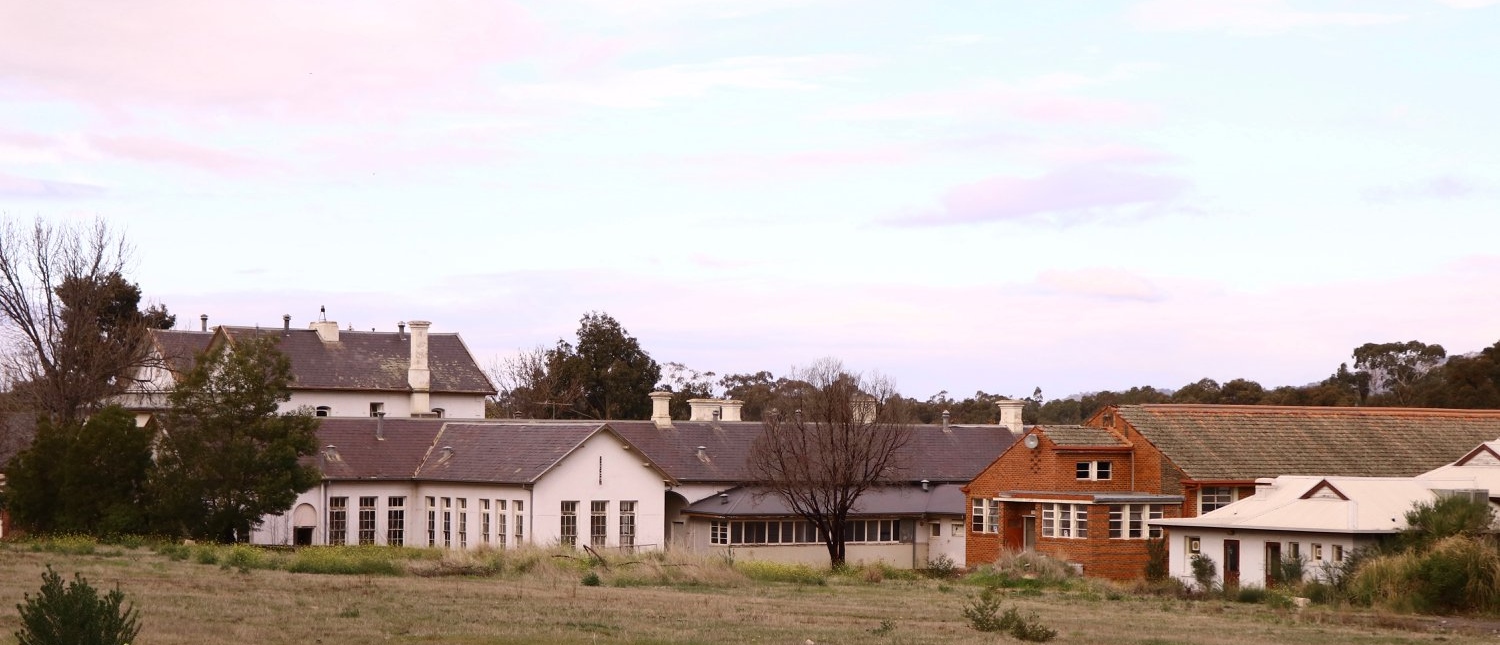
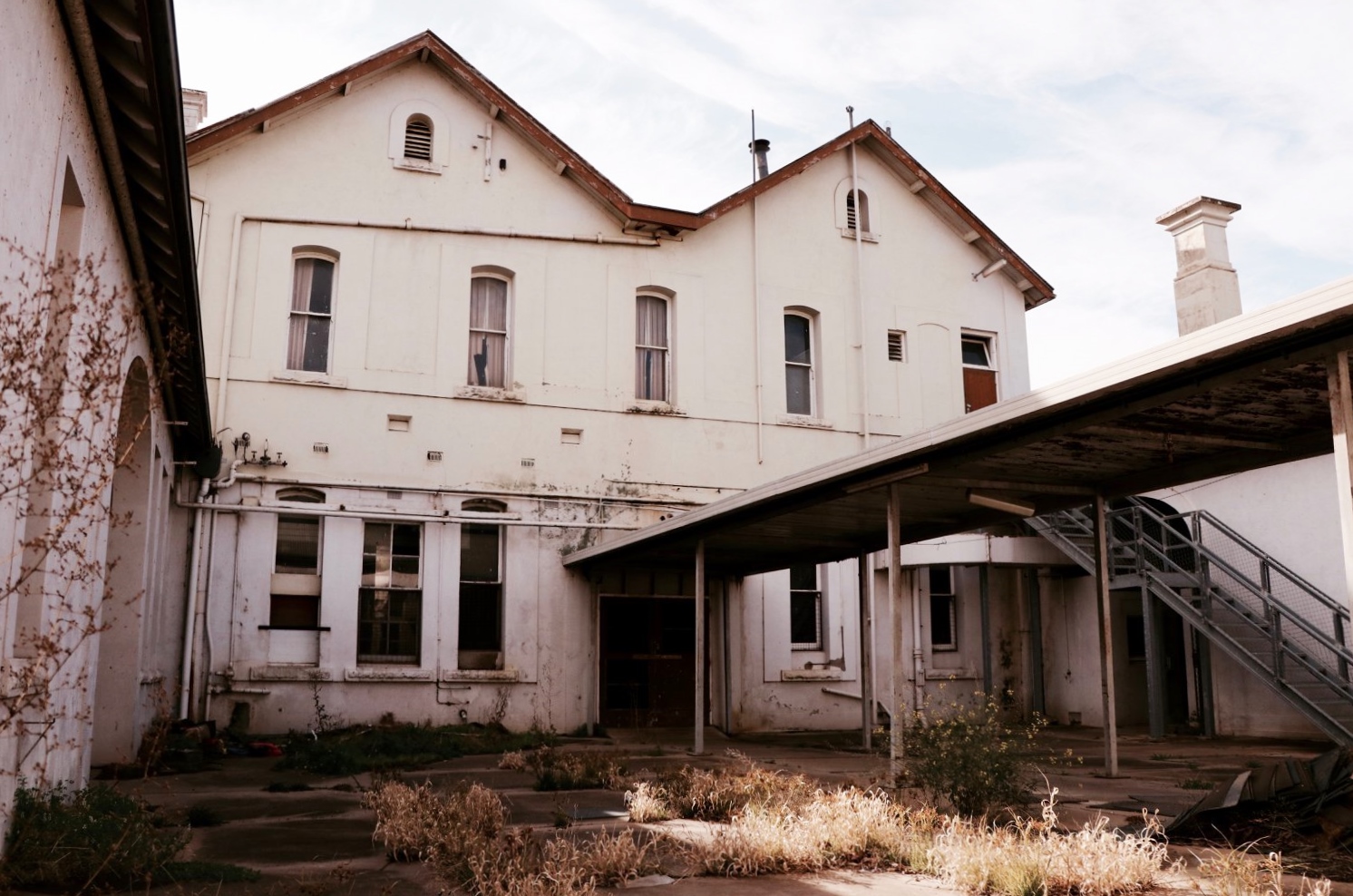
At the beginning of the month Abandoned Melbourne, (a Facebook page who visit & photograph derelict buildings & sites of general public interest, and share the images so you don't have to take the risks going to these places) obtained permission to record at Pleasant Creek in Stawell. Here are a sample of their images, and their history of the site.
Their images have created a time capsule of the site after its closure and before any re-development.
In 1861, the Pleasant Creek Hospital opened as a medical facility for the population of Stawell and district. The Syme Ward building for convalescent patients was added in 1904.
In 1933, the facility was replaced by a newly-built hospital in the town of Stawell. In 1934, the Mental Hygiene Department acquired the old Pleasant Creek Hospital site and converted it to accommodate children with disabilities, which became Pleasant Creek Special School. 
The first residents (18 boys) were admitted in 1937 from Royal Park Depot.
At the end of 1937, there were 98 children living at Pleasant Creek. In 1968 it was renamed Pleasant Creek Training Centre, caring for people with intellectual disabilities.
From the 1950s to the 1980s, there were several building developments:
1957, Lonsdale Unit expanded capacity to 113
1969, Bellfield and Fyans Units increased numbers to 196
1977, Alexandra Unit converted to recreational and lecture room facility.
1977, Day Centre, Nurses' Home and Clinical Services Administration buildings
1985, Nara Unit closed for renovations and residents moved to the previous staff living quarters.
Interior of the Lonsdale/Bellfield/Fyans unit.
During the 1980's, Pleasant Creek Training Centre housed up to 140 male and female residents, aged 10 to 45 with mild to profound levels of intellectual disability, in five residential units and four on-site houses. Services were aimed towards community repatriation. The Centre provided respite care to residents from the local community and used generic services from recreational to medical.
The Concert Hall
The Intellectually Disabled Persons' Services Act 1986 abandoned the previous ‘medical model’ that defined disabilities as illnesses, for a ‘care model’ based on the philosophy that the disabled should not be ‘warehoused’ in institutions, and care of intellectually disabled persons was reallocated to the Community Welfare Services Department.
In 1986, the Centre had about 160 residents, each client now had to be given opportunities to realise his or her full potential. General and individual service plans were created to direct each person’s development. 

In 1988, the report commissioned on Intellectual Disability Services recommended the dismantling of institutions for the disabled, to be replaced by smaller facilities. It recommended that Pleasant Creek be closed by 1993, which did not eventuate.
In 1990, an independent inquiry was ordered into allegations of sexual assault at Pleasant Creek. In response to the “Jude Wallace Report” (as it was known), Community Services Victoria and Pleasant Creek Training Centre developed mechanisms which lead to improved systems for the reporting of incidents & improved standards of service delivery.

 From 1990, Pleasant Creek provided residence, education and training facilities for 113 intellectually disabled people of varying ages from late teens to mid 50's.
In 1996, the Victorian government announced the impending closure of Pleasant Creek, in favour of 'community living' options for its residents, and the facility closed in 1999.
Thank you to Pleasant Creek for letting Abandoned Melbourne freely explore the hospital, and thanks too to Abandoned Melbourne for the visual record. Follow along on Pleasant Creek’s Facebook page to see the works being done and future dates for tours.The buildings are currently being cleaned up to be a business & tourism hub.
Then check out Abandoned Melbourne’s Facebook page, there are many more photographs on their Page, and they don’t just limit themselves to Melbourne (the Profile pic is at the Sister Rocks near Stawell).

Tuesday, 3 July 2018

Fourth of July -1918

Today, the fourth of July 2018, marks the 100th anniversary of the Battle of Hamel which was one of the most significant Australian actions of the First World War. It is well knows not only as a decisive victory, but for the contribution by Australian Lieutenant General John Monash who was commanding the Australian Corps for the first time, and it was the first occasion that United States and Australian soldiers had fought alongside one another.

Many Wimmera volunteers were amongst the more than 7,000 Allied infantry that took part (fewer than 3,000 were front-line soldiers) and were also amongst the 1,400 casualties who were either killed or wounded.
This battle was fought in and around the town of Le Hamel, (near Villers-Bretonneux & Peroone) in northern France, aiming to straighten out a bulge in the British line, and for Monash it was also an opportunity to test the tactics he believed could be used on a larger scale in future offensives.

Drawing on more than three years’ experience in wartime command, and the lessons of past successful actions by both sides, Monash devised a combined arms assault co-ordinating artillery, tanks, aircraft and infantry.


The attack was planned in intricate detail to last for 90 minutes, and the battle was a stunning success taking just 93 minutes for the Australians and Americans to achieve all their objectives. The time taken for the battle was a success in itself as many battles on the Western Front during World War One lasted much longer than planned and few achieved all the planned goals.
Along with the main action at Hamel, a diversionary attack was undertaken to the north east near the village of Ville-sur-Ancre to disguise the main attack and disrupt the ability of the Germans to counter attack.

 
Peter FitzSimons' book on the battle is available as a book or audio, while John Laffin's "The battle of Hamel"  argues that while Australian leadership was first demonstrated at Gallipoli, it came of age at Hamel.
A number of soldiers involved in the battle came from Horsham and the Wimmera. One of the volunteers who fought on this day one hundred years ago was Private Percival Roy Penglase, one of five sons of Mr Alfred Penglase of Jeparit who had enlisted and were at that time all serving in Europe.

Much of this information from the Dimboola Courier's article

Wednesday, 27 June 2018

The last stop

The first Wimmera regional Library bookmobile
The bookmobile was officially opened in Birchip and Donald on 22nd June 1967 by the State Librarian Mr Kenneth A.R. Horn.
The Official Opening
The mobile started operation in July 1967, in the shires of Birchip, Donald and Karkarooc, covering an area of 3,331 square miles. It travelled up to stops at Patchewollock in Karkarooc, and Watchupga in Birchip Shire.
The class of 1968 at Donald Primary School
 In 1984, Birchip changed from a Mobile site to a joint-use branch library at the Birchip P-12 College, with Margaret Glen and Andrew Rossner working together.
The Mobile at Donald Primary
The vehicle was a Bedford TK KEL 3D. It carried 3,500 books. The first operator/driver was Mr Jack Klowss, he was on the road from Tuesday to Saturday, staying away 3 nights a week.
Jack Klowss on the mobile
Move forward 50 odd years, and the Mobile Library is making its final visit to Donald. After 3 new vehicles and even more operator/drivers, Paul will drive up Woods Street and park outside the Post Office for the last time tomorrow.
The Bedford parked outside the Donald Post Office site

Friday, 22 June 2018

Butter factory spreads

Back in July 1893, the Horsham Town Hall was the venue for a meeting calling for the establishment of a shareholder butter factory in Horsham.
Following the promise of milk from 300 cows, cream from a Natimuk factory, and Burnt Creek and Green Lake district support for the supply of cream, the dream was realised.
On 11th October 1894 the Horsham Butter Factory was officially opened by the Mayor Cr W.F. Osborn. Built for £1,350 a “commodious, sightly and highly convenient building” was erected on the corner of Hillary and Urquhart Streets.
As a butter factory, milk arrived in cans on suppliers’ carts, it was hoisted to the upper storey, weighed, and run into a large receiving tank. The milk was then conveyed to the separator for the cream and buttermilk (the buttermilk was pumped by centrifugal pump to tanks at the rear of the building for sale or return to suppliers). The cream went to a large Cherry churn, where salt was added, then it was washed and pressed into pats. The factory’s power came from a Tangye vertical engine.
The Opening ended with 3 rousing cheers for the Horsham Butter Factory.
Move on many years and diary and butter production has declined across the region, and the factory building becomes the Horsham Italian Social Club. In the post war years the building was a centre for many migrant Italian families. About 120 families were involved with the club at its peak. The building was important for the Italian community who migrated to the Wimmera in the 1970s and 1980s.Members of the Italian community would come together to play cards and socialise, but now many have passed on or moved away. The building was used for weddings, birthday parties and other functions.
Now, the property includes a large building with a formal entrance that leads to a hall. The building has a commercial-grade kitchen, bar and restrooms. And the Club felt that the time had come to sell the building and to donate the money from the property’s sale to charity.
From Wimmera Mail Times: Former Horsham Italian Club treasurer Lorenzo Manserra Photo: Elijah Macchia
On 20th April the building went to auction, and in negotiations afterwards it was revealed that the Horsham Table Tennis Association has found a new home.
After years of searching for a permanent place and playing out of the Maydale Pavilion at the Showgrounds, the Association has purchased the building, for an undisclosed price.
The Association’s president Leon Forrest said the purchase was a big move forward in helping grow the association’s numbers and viability, as it had grown out of the facilities at the Maydale Pavilion.
 “We want the place to be for the community. We cover all age groups, from juniors to seniors, and we want to provide a hub for enjoyment.”
“The place will be used for our tournaments, think seven to eight tables can fit in. The dance studio currently uses the building, but they are looking at other options for what the space could be used for, eg. other community clubs that want to hire or rent it.
The Association are holding a Community Open Day on Sunday 24th from 2pm to 4pm.
So the Butter Factory gets another lease on life.

Monday, 18 June 2018

Teaching at Jung

The library was gifted a number of photographs today, for our 'Wimmera in Photographs' collection.
Yes we are still accepting donations.
A couple were interesting for different reasons:
Firstly one of Jung State School in the early 1900s. It is of great clarity showing the students in the garden they manage, with the school building and attached residence in the background.
And what makes this special is teaming it with the one below from Museums Victoria's "The Biggest Family Album in Australia" collection, to see the changes in the buildings, the children's attire, and the growth of the garden.

Much of the garden's credit would be due to one of the men in the photo below (another of today's donations). The man with the cross, marked above his head - teacher at Jung from 1900 to 1920 - Mr George Page.
Mr Page was in charge of the school when it reached its peak of 80 pupils around 1910. 
A theory has been advanced as to why the men are gathered for the photograph, and we're wondering whether it is due to the ribbons on their lapels, and maybe they are White and Blue Ribboners in the Temperance League (as discussed in a previous post 'The church, the hotel, the society') as there was a branch of the Temperance Movement in Jung.
There are stories behind many of our photographs. If you wish to have some of your photos added to 'Wimmera in Photographs' just contact your local library branch.

Tuesday, 22 May 2018

Final Fulham

Wimmera Mail Times Picture: Elijah Macchia
The Fulham Station homestead, at Kanagulk, was originally settled in 1840 by Francis Desailly. It was the first homestead to be settled in the Balmoral area.
Today, current owners Greg and Heather Walcott have the refurbished homestead on the station and its 65 acres (26.3hectares) on the market.
Greg & Heather (Wimmera Mail Times Picture: Elijah Macchia)
 The original landlord, Sir John Owen, may have never seen the land. He sold it privately to George Armytage and his family who established the buildings. The buildings date from 1846 and were progressively built after that.
In 1857 Fulham became the home for Charles Armytage and his wife Caroline. Eight of their 10 children were born at Fulham (50 miles from the nearest doctor). Fulham's remoteness encouraged them to purchase Como House in South Yarra as a town house in 1864.
The Armytages finally sold their Fulham and Mt Sturgeon properties in 1948, to the Soldier Settlement Commission, and the Commission developed Fulham Estate into settlement blocks.
 
Greg Walcott’s father successfully applied for the homestead block, and the homestead has been with the Walcott family ever since. Greg then inherited Fulham from his father and has spent almost his entire life living at the property.
Now they are moving on, and Fulham is looking for a new owner.
Wimmera Mail Times Picture: Elijah Macchia
Fulham Homestead was first listed with the National Trust in July 1965. Most of the heritage-listed buildings at Fulham have been built with ironstone. The stone is from within a kilometre of the homestead which was built on an ironstone shelf. The homestead is made from rubble-coursed ironstone with 2ft-thick walls, and contains two bedrooms, bathroom, living area, office and kitchen.
The Guesthouse
Along with the homestead building, there is a detached guesthouse featuring three bedrooms, two bathrooms, lounge and fully renovated kitchen, as well as a reading room with windows that frame an ancient Moreton Bay fig tree.
 
The tennis court & gardens (Wimmera Mail Times Picture: Elijah Macchia)
Greg and his wife Heather have developed the site - from the garden with sculptures Greg as created, along with a vegetable patch, a child’s play set under a tree and a lawn tennis court. “The garden was established when the property was built and then it was bulldozed. When (Heather and I) were married it was only a horse paddock, so we gradually re-established the garden in stages...there were a few established trees but very little else so eventually we have developed it right down to the water’s edge,” he said.
The garden slopes down to meet the Glenelg River at a broad bend. The property has its own watering hole finished with a bbq pit, wooden bench & table, an outdoor toilet, and a canoe landing stage.

The station cookhouse
The station cookhouse is one of the 10 heritage listed buildings which the Walcott’s have reinvigorated to a dining room with the original fireplace and stone oven still intact, now utilised as a wood-fired pizza oven.
Greg said moving away from this piece of 'living history' where he had spent almost 65 years of his life, would be a huge change.

Wimmera Mail Times interview video
If you have a spare $1.1 million- $1.2 million, then, Expressions of Interest close on Friday May 25 at 1pm.

Friday, 4 May 2018

Tales from the churchyard

A word about the effort some organisations, trusts have gone to assisting family and history researchers.
Just a couple of examples from afar.

Old St Matthew's Church, Lightcliffe, is a former church in the village of Lightcliffe, West Yorkshire in England.


The original building on the site was a chapel of ease called Eastfield Chapel, which was built in 1529. This was damaged during the Reformation, and repaired in 1536. The chapel was rebuilt as a church in Neoclassical style in 1775. It was then replaced in the late 19th century by a new church a short distance away. 
The old church was then used as a mortuary chapel. It was severely damaged by a storm in the 1960s and its fabric deteriorated and the church suffered from vandalism. Now only the tower remains.
   
The tower is square in cross-section and constructed in hammer-dressed stone with ashlar dressings. 
On the west face is a round-headed window with a circular window above. At belfry level is inscribed stone taken from an earlier church on the site. At the top of the tower is an octagonal cupola with a ball finial. 
Inside the tower are an inscribed stone dated 1529, benefaction boards, and a monument from 1830 designed by Richard Westmacott.
In its accompanying churchyard there are over 11,000 grave sites.

Lots of centuries old history, but St Matthews has a website, a number of YouTube clips,
and a Friends Facebook page, and its churchyard cemetery has headstone photographs and transcriptions.


While the Prospect Cemetery in Toronto has affiliated with Google Maps to guide people in finding graves. Especially helpful in large cemeteries (148,000 burial records have been indexed for the cemetery), and when the cemetery concerned is halfway across the world.
Prospect Cemetery (part of the Mount Pleasant Group) has been in use since 1890, with a special focus on its 5 acre Veterans' Memorial, Canada's largest First World War memorial.


It has a Cemetery App with options to 'Find a grave', 'Find a tree' in the arboretum search, and a 'Notable person' search.

There's also a little video of where Toronto's original Potters Field cemetery was located in now downtown Toronto. 


This is what just two different cemeteries have been able to achieve by embracing a number of digital initiatives.