Now we no longer have to think what the letters A.I.G.S. stand for. The Australian Institute for Genealogical Studies has changed its name to 'Family History Connections...tracing ancestors in Australia and beyond' and launched a new look website,
with a great tag-line "Find the story, not just the person"
Their Press release states: "We are still the same organisation with the same objectives and deep commitment to assist members and the wider community in their search for their ancestors in Australia and overseas".
Their extensive library is still located at Unit 1 / 41 Railway Road, Blackburn in Melbourne, where library volunteers can assist members & visitors with their family history research.
Interest Groups (see the list of groups below) have been established to enable members who are researching their families in a particular area, to assist each other with their research and to share their mutual successes and difficulties.
You can also follow them on their Facebook page which utilises the old logo that everyone is familar with, and details all sorts of news items.
So you can access their website from home, or if in Melbourne check them out in Blackburn, they may have that difficult to find item you've been searching for.
This blog provides information, stories, links and events relating to and promoting the history of the Wimmera district.
Any additional information, via Comments, is welcomed.
Sunday, 4 February 2018
Wednesday, 24 January 2018
From Dimb to Basalt Knob
A retired railway carriage from Dimboola has ended up in the mountains of the Victorian High Country.
The T 101 icewagon railway carriage hut aka Basalt Knob Hut, was built in 1894 at the Pinder & Kelly Newport workshops
for the Victorian Railways and de-registered in 1978. In the early 1980s a Dargo timber mill purchased the rolling stock from the Dimboola line for forestry workers accommodation and trucked them to Dargo.
The carriage was in a Dargo mill when it was bought by Ken Scott from David Coates, who sold it to David Eddy from Deeandal & Sons logging company.
A logging road was constructed, and a loggers' camp erected at Basalt Knob in 1982. The T 101 icewagon was carted it up to its location up above Talbotville near Blue Rag. When the logging finished all the other carriages forming the logging camp were removed by the mill, but they never got around to removing the T 101 carriage, so T 101 now ‘The Basalt
Knob Hut’ is still there offering emergency shelter in the Victorian High Country, at Basalt Knob near the junction of Brewery Creek Track & Ritchie Rd which can be accessed via the Dargo High Plains
Rd.
Story and photos from the Victorian High Country Huts Association Facebook page.
Hauled by steam diesel powered locomotives, the ‘T’ insulated ice van carriages had an ice bunker running along the middle of the ceiling that was filled with ice from hatches in the roof. Used to transport refrigerated meat carcasses or other goods that required a cool temperature, their walls were between 4 & 6 inches thick for insulation. The vertical channel at the end was a drain for the ice bunker. All T's in this number group had lever type handbrakes. This series of T vans had a 12 ton capacity. A relic from a bygone age they lasted to the late 70's in "refrigerated" service. (from Victorian Railways Net)
A further update: unfortunately T 101/Basalt Knob Hut was lost in the January 2020 bushfires.
Labels:
Bushfires,
Dimboola,
Facebook,
High Country huts,
railways
Thursday, 18 January 2018
Hamilton descendants
Via its Facebook page 'Pioneering Days Western Victoria', the call has gone out to all the Hamilton descendants of J.C. Hamilton and his brother Tom Hamilton. The invitation is extended to all residents of the Western District, including the Bringalbert and Ozenkadnook sites.
![]() |
| Lake Bringalbert |
J.C. (Joseph Charles) Hamilton was born in Ormiston in Scotland on 11th April 1836. He and his family arrived in Melbourne in 1841, and with J.C.'s uncle Thomas Gibson established Bringalbert and Ozenkadnook pastoral properties. J.C. died at Apsley in 1927, not long after publication of his manuscript "Pioneering days in Western Victoria : a narrative of early station life".
The Group is looking for any direct descendants of J.C.'s younger brother - Thomas Gibson Hamilton was born at Kilmore in May 1844, and died in 1875. His headstone in the Melbourne Central Cemetery reads. "Late of the Bringalbert Station near Apsley who died on the 2nd April 1875. Aged 30 years. His death certificate states he died from Peritonitis after suffering a fever for 3 weeks. He had a son Thomas Gibson Hamilton II was born posthumously in August 1875 and died in 1953. Tom Jnr's mother was Mary Grace Cross (1855-1934).
An earlier series of posts 'Overland' detail Thomas Gibson Hamilton's overland trek to Darwin as told by his nephew.
The book launch will take place in Edenhope on the shores of Lake Wallace where Tom bought his Aboriginal team from Bringalbert Station to practice with the Edenhope Cricket Club in 1865/1866.
The Group is looking for any direct descendants of J.C.'s younger brother - Thomas Gibson Hamilton was born at Kilmore in May 1844, and died in 1875. His headstone in the Melbourne Central Cemetery reads. "Late of the Bringalbert Station near Apsley who died on the 2nd April 1875. Aged 30 years. His death certificate states he died from Peritonitis after suffering a fever for 3 weeks. He had a son Thomas Gibson Hamilton II was born posthumously in August 1875 and died in 1953. Tom Jnr's mother was Mary Grace Cross (1855-1934).
An earlier series of posts 'Overland' detail Thomas Gibson Hamilton's overland trek to Darwin as told by his nephew.
![]() |
| The flat practice ground in front of the Bringalbert woolshed |
Labels:
Aboriginal cricketers,
Bringalbert,
Edenhope,
Events,
Hamilton family
Monday, 11 December 2017
What's old is new again
Sir Robert Menzies was known for his 'The Forgotten People" speeches, credited with helping the Liberals return to power.
The speech rapidly acquired the fame for which it continues to be remembered and invoked. Shortly after it was delivered, it was printed and circulated as a pamphlet by Robertson & Mullens of Melbourne. The next year, Angus & Robertson published a selection of the addresses under the title The Forgotten People and Other Studies in Democracy.
Now, 75 years after the event, it has been reprinted complete with the old style cover.
"The forgotten people : and other studies in democracy" is a collection of essays broadcast weekly by Menzies in 1942. Some of them deal with matters of permanent interest while others are dated by passing events. They have represent a political philosophy which emerged in the changing currents of war.
'From the standpoint of a true patriot and in the spirit of man to man, Mr Menzies examines, in The Forgotten People, many of the problems arising from our present state of war. With moving frankness and sincerity he stresses both the rights and the duties of the people and of Parliament. He states clearly what our position is, what our aims are, and the part that every citizen must play if the war is to be won. He looks toward the future, the post-war world, and shows how we must work and plan to-day to combat the dangers that will inevitably beset to-morrow. He examines the meaning and achievements of democracy; he analyses the implications of President Roosevelt's four freedoms; and he upholds the dignity and the rights of the 'forgotten people', the middle classes, the 'backbone of this country.' This valuable series of talks clarifies our problems and their solution and, while not attempting to lessen the gravity of our present position, glows with confidence that the democratic principle shall prevail.'
The speech rapidly acquired the fame for which it continues to be remembered and invoked. Shortly after it was delivered, it was printed and circulated as a pamphlet by Robertson & Mullens of Melbourne. The next year, Angus & Robertson published a selection of the addresses under the title The Forgotten People and Other Studies in Democracy.
Now, 75 years after the event, it has been reprinted complete with the old style cover."The forgotten people : and other studies in democracy" is a collection of essays broadcast weekly by Menzies in 1942. Some of them deal with matters of permanent interest while others are dated by passing events. They have represent a political philosophy which emerged in the changing currents of war.
'From the standpoint of a true patriot and in the spirit of man to man, Mr Menzies examines, in The Forgotten People, many of the problems arising from our present state of war. With moving frankness and sincerity he stresses both the rights and the duties of the people and of Parliament. He states clearly what our position is, what our aims are, and the part that every citizen must play if the war is to be won. He looks toward the future, the post-war world, and shows how we must work and plan to-day to combat the dangers that will inevitably beset to-morrow. He examines the meaning and achievements of democracy; he analyses the implications of President Roosevelt's four freedoms; and he upholds the dignity and the rights of the 'forgotten people', the middle classes, the 'backbone of this country.' This valuable series of talks clarifies our problems and their solution and, while not attempting to lessen the gravity of our present position, glows with confidence that the democratic principle shall prevail.'
Robert Gordon Menzies was born to James and Kate Menzies on 20 December 1894 in Jeparit. His birth was in a room at the back of his father's general store where the family lived.
The land around Jeparit was gradually being cleared of virgin scrub for wheat growing, and money was scarce. James Menzies carted supplies with a horse and wagon to the outlying farms, but it was difficult to make the business pay in such a small pioneering community and many farmers were given food on credit until their next harvest came in.
Family photo taken on the bank of the Wimmera River - James Menzies with (from left) sons Les, Frank & Robert, wife Kate
and daughter Isobel. Miss Annie Drendel is seated at left - from the Jeparit &
District Historical Society
In 1899 at the age of four and a half, Robert commenced school at Jeparit. The Menzies children began their education at the first Jeparit school - No. 2988 - in a small timber room that had been shifted to the township from Dimboola North School No. 1875 (formerly Woolshed) in 1894.Robert and sister Isobelle left Jeparit in 1905 to join brothers, Les and Frank, living with their grandmother in Ballarat. They attended Humffray Street State School in 1906.
Wednesday, 29 November 2017
Victorian artefacts
Victorian Collections is a central portal to the cultural treasures held by museums and galleries distributed across Victoria. Culture Victoria is its sister site.
It is also a free collections management system for Victoria’s cultural organisations and a tool for students, researchers and curious minds.
Victorian Collections is free for collecting organisations within Victoria. It is designed for Public Organisations not Private Collections, and is a
complete, industry-standard cataloguing tool for organisations of all
shapes and sizes.
Organisations can bulk-load onto the VC database, and VC do not impose file size limits, and can support most file types, be they audio oral histories, videos or image files.
Files are provided under Creative Commons licence for non-commercial use. The filea can also be harvested by Trove.
It is also a free collections management system for Victoria’s cultural organisations and a tool for students, researchers and curious minds.
It has photo entries you can browse, if you hover over an image you get the text
description. And we aren’t necessarily talking about promoting your entire collection, you could have some of your most interesting, unique items, enough to tantalise a browser to enquire further and contact you.
![]() |
| a sample page - St Arnaud |
![]() |
| Calico flour bag from Bruntons Flour Mill, Rupanyup |
Organisations can bulk-load onto the VC database, and VC do not impose file size limits, and can support most file types, be they audio oral histories, videos or image files.
Files are provided under Creative Commons licence for non-commercial use. The filea can also be harvested by Trove.
Thursday, 23 November 2017
Reviving the Mechanics'
Victoria once had more than one thousand Mechanics' Institutes scattered across the state. In many cases Institute halls were the first public building in a town, and today they are often the last.
To obtain a complete picture of the heritage these organisations provided, the Mechanics' Institutes of Victoria Incorporated has been digitising the local records held by halls & institutes.
Records are sometimes held by the halls themselves, or with the local council, historical society, or museum, even with private individuals and trustees.
The digitisation process is funded from both philanthropic and government grant money.
After MIVic have made digital copies, the originals are returned to the records owner or provider along with a digital CD of the records. Copyright remains with the records owner.
Locally, records which have already been digitised are: Apsley, Corack, Donald, Edenhope, Laen, Langkoop, Poolaijelo, Rich Avon West, St Arnaud, and Stuart Mill.
If you have Mechanics Institute records just waiting for the opportunity to be digitised, contact the Scanning Project Coordinator Judith Dwyer at mirc@mivic.org.au
![]() |
| Great Western |
![]() |
| Murtoa |
The digitisation process is funded from both philanthropic and government grant money.
![]() |
| Rainbow |
After MIVic have made digital copies, the originals are returned to the records owner or provider along with a digital CD of the records. Copyright remains with the records owner.
Locally, records which have already been digitised are: Apsley, Corack, Donald, Edenhope, Laen, Langkoop, Poolaijelo, Rich Avon West, St Arnaud, and Stuart Mill.
If you have Mechanics Institute records just waiting for the opportunity to be digitised, contact the Scanning Project Coordinator Judith Dwyer at mirc@mivic.org.au
Labels:
Apsley,
Corack,
Digital resources,
Donald,
Edenhope,
Laen,
Langkoop,
Mechanics' Institutes,
Poolaijelo,
Rich Avon,
St Arnaud,
Stuart Mill
Monday, 20 November 2017
Wimmera...Way Back When milestone
This blog reached a milestone overnight, when it ticked over one hundred thousand visits.
From rather humble beginnings back in January 2011, there has now been 100,097 pageviews.
For a blog devoted to the history of the Wimmera, as expected most pageviews come from Australia (54,768), but hopefully the 2,297 Ukrainian, 926 Chinese and 505 Turkish visitors also got something from the posts too.
The most popular themes continue to be railways.
So thanks to you all.
From rather humble beginnings back in January 2011, there has now been 100,097 pageviews.
For a blog devoted to the history of the Wimmera, as expected most pageviews come from Australia (54,768), but hopefully the 2,297 Ukrainian, 926 Chinese and 505 Turkish visitors also got something from the posts too.
The most popular themes continue to be railways.
So thanks to you all.
Sunday, 19 November 2017
Solving the Wonnangatta mystery
The Wonnangatta murders occurred in late 1917 and in 1918, in the remote Wonnangatta Valley in the High Country in Victoria. The victims were manager of the Wonnangatta station property Jim Barclay, and John Bamford, a cook and general hand on Wonnangatta. While Barclay was a well-respected and much liked bushman, Bamford was regarded
with suspicion, and was known to be easily roused into violent tempers. The case has never been solved, but many stories abound.
![]() |
| Wonnangatta Valley |
To commemorate the 100th anniversary of the Wonnangatta murders, Horsham Branch are running a Criminal Investigation session on 10th January 2018
Each participant will receive a copy of one of the five published books relating to Wonnangatta and the murders, and their own “Wonnangatta Casebook”. They then need to read the story, and formulate their theory or theories. Then write up their thoughts in their casebook, thinking about any relevant -
* Suspects
* A
timeline
* Motives
* Facts
To test their hypothesis, all participants will meet with other contributors in a round table discussion on 10th January at 18:00 hours (6pm) in the Squad Room at Horsham Library.
Places are limited. Bookings are essential and must be made in person at the library to collect your books.
Thursday, 21 September 2017
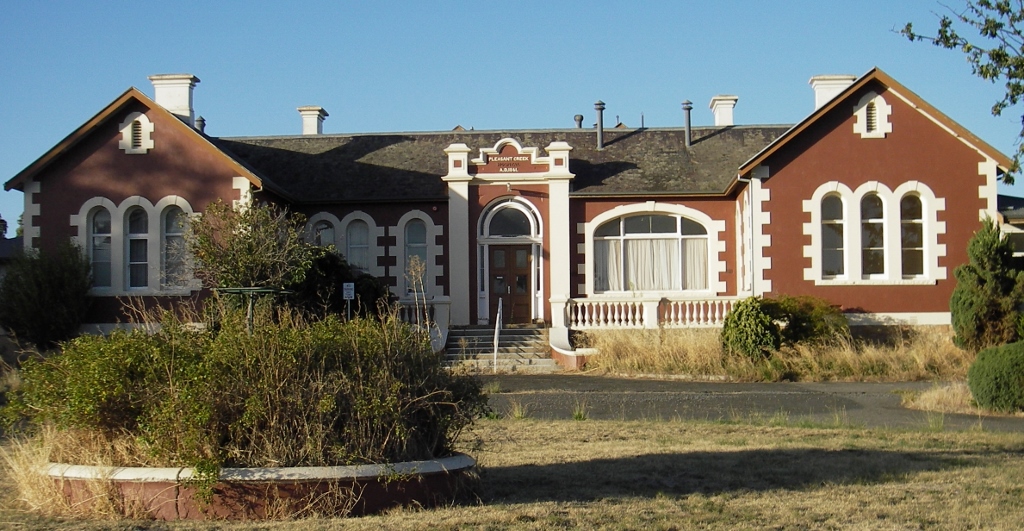
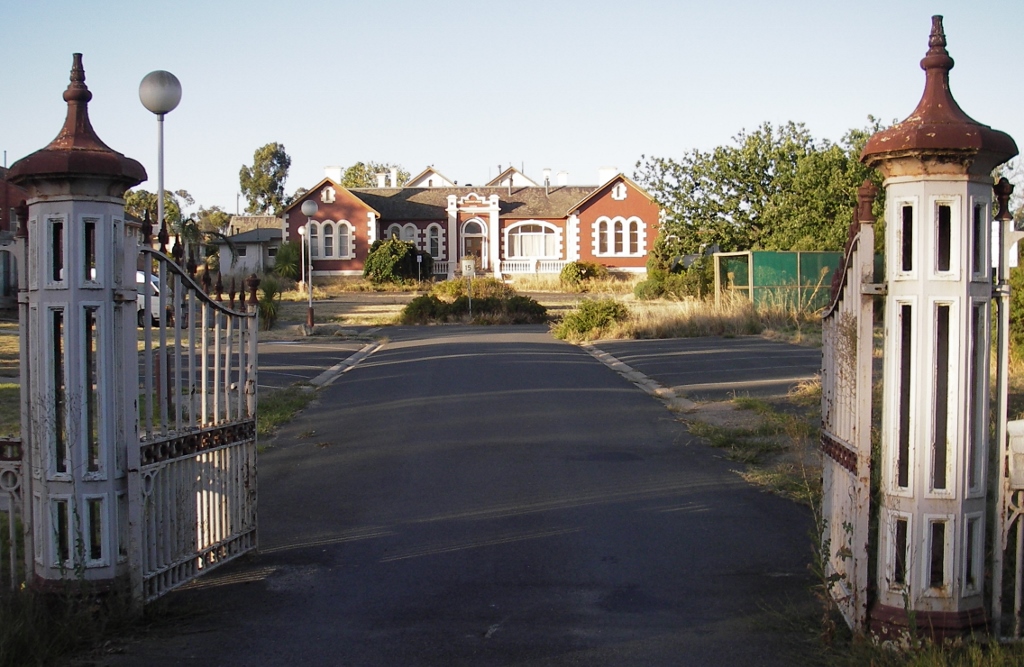
Pleasant Creek site
The Pleasant Creek Hospital site has finally been leased. New owner Keenan Quinsee intends to open some of the buildings for Aradale-style ghost tours. More details on the plans in the Wimmera Mail-Times article, and photos of the buildings in the Stawell Times-News article.
Pleasant Creek Centre was the site of the first local hospital in Stawell, which was opened in 1850 (the only hospital in western Victoria between the South Australian border, Ballarat and the Murray River. Local landowners and miners subscribed to its construction. It was reserved in 1861 and again in 1883. Part of the building remains on the site, there were more elaborate alterations in 1881, it featured a Benevolent Ward for elderly miners. The area has a long history of community use, initially as a health service and subsequently as the Pleasant Creek Training Centre, an area where people with intellectual disabilities were accommodated and educated and participated in day programs.
For many years a school was located on the site as well as accommodation for children, teenagers and latter disabled adults. Following changes to intellectual disabled housing policies, the Human Services Department transferred the clients from the Pleasant Creek Centre into community housing.
Parliamentary legislation removed the final reservation on the land and the 13 hectares was identified as having no further public purpose
and had been for public sale since 2008.
Subscribe to:
Posts (Atom)