This blog provides information, stories, links and events relating to and promoting the history of the Wimmera district.
Any additional information, via Comments, is welcomed.


Wednesday, 3 October 2018

Jenkin's Library

Re-posting this, as I've just come across this photograph of Jenkin's store c1960 (thanks to the book "Road Board to Restructure : the history of the Shire of Wimmera").

 It started innocently enough with:
"I have been given this book - wonder if you know anything about the Jenkin's  library".
So off to search Trove, with this result:

JENKIN'S 
Music Shop, Fancy Goods and Gifts 
Parents who sincerely desire to give their young folks a good start in life will see that they have the opportunity of learning to play some kind of musical instrument, for there is no more glorious form of artistic expression than music. Those who desire a thoroughly reliable instrument, at a reasonable price, should visit Jenkin's Music and Gift Store in Firebrace Street, Horsham. 
Mrs. R. A. Jenkin and her two sons are the principals of this establishment, which was founded by her husband, Mr. R. A. Jenkin many years ago. and it is to their credit that this thriving business is still one of the most popular shops in Horsham. Mrs. Jenkin assumed control of the business on the death of her husband last year. 
As Allan's agent in Horsham, Jenkin's stock a wide range of instruments including pianos, piano accordeons, accordeons, ukeleles, mouth organs, etc. All the latest sheet music is received by this establishment soon after it is released. An extensive range of gramophone records is always kept up to date by these dealers. This establishment also carries a wide range of crockery, glassware, fancy goods, toys, Semco linens and cottons, fashion books, knitting books, Weigels dress-making patterns, etc. 
Kiddies toys including teddy bears, dolls, and motor cars are also stocked. A feature of this store, with its modern plate glass windows, is its multitude of artistic and beautiful articles suit-able for gifts, including delicate china and beautiful cut glassware. 
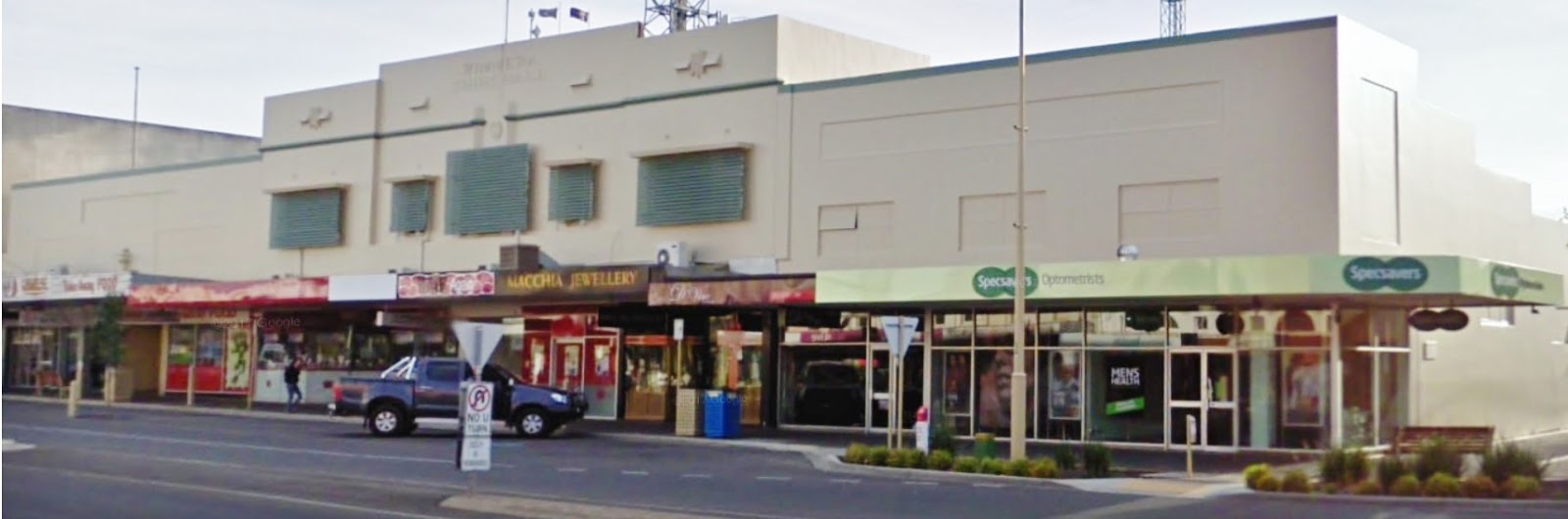
The Jenkin's site (under the old Shire Office Buildings facade), now Specsavers
Another important feature of this concern is the circulating library which they conduct. All books by the best known authors are included in this section, including dramas, thrillers, Western and love novels. A large number of new books, many suit-able for gifts, are included. In addition to the circulating library, Mrs. Jenkins also controls the "Readwell" circulating, library, giving a variety of new books every month. It is most worthy of mention that in addition to her husband having served in the last war, Mrs Jenkin is herself a re-turned nursing sister, having served the A.A.N.S. abroad with the last expeditionary force.

This was from 'The Horsham Times', Tuesday 9 July 1940, page 7, and even more importantly the article was from a larger piece "Who's Who In Business". This is now a snapshot of the businesses operating in Horsham in 1940 - an advertorial with a potted history of the business and its people.

Noske's flour mill
The newspaper piece was part of a "Business As Usual" campaign of Horsham business people's determination to maintain service despite upsets due to war and whatever difficulties lie ahead. In these pages something is told of the business people and the service they render. These commercial houses and industrial organisations, on whom you depend for good value and economy, are your agents in the markets of the world. What it now represents is a raft of information on mostly vanished companies and trades, with virtually all these family businesses no longer trading or sold out to other concerns in a generational shift.

Other businesses listed were: R.A. Ludbrook - chemist ; L. Hutchesson & Son - funeral directors ; Noske Brothers - flour mills ; Thomas Young & Co. - auctioneers, stock & station agents, Ford garage ; Roy Findlay - furniture salesman, upholsterer ; Boyds - general drapers ; Bevan's - grocer ; Weight's Timber Yards - builder's supplies, timber ; A. Wynne & Son - duco, iron, fuel, farmers requisites ; R. McMullin - chemists ; Bolton's RACV Garage ; Horsham Butter Factory - dairy products ; Rockman's - ladies' wear specialists ; D. Ellis - baker & pastry cook ; Shepherds - general drapers ; A.F. Weight & Sons - funeral directors ; Peacock's Pharmacy ; M. Robertson - Super Elliott agent (cycles) ; Hotel Locarno - R.E. Charles proprietor ; E.F. Gerlach - hardware, timber & building contractors ; Henry Smartt Trading Co. - (transport) ; F. Cincotta - lounge, milk bar, fruit & confectionery ; Hardinge Brothers - electrical ; A. Taranto - fruit & vegetables ; Dalgety & Co. - (stock & station agents) ; Carine Brothers & Duncan - fibrous plaster manufacturers & plasterers ; Newton & Miller - general carriers, grain & produce merchants.
Wynne's Corner, site of the Wynne's building in 1937 (now Trev's)

Tuesday, 25 September 2018

A poor man's bushranging

This story has surfaced again, there are all sorts of folklore associated with 'the bushranging gang in Edenhope', much of it associated with an engraving in the 1880 edition of "The Australasian Sketcher".
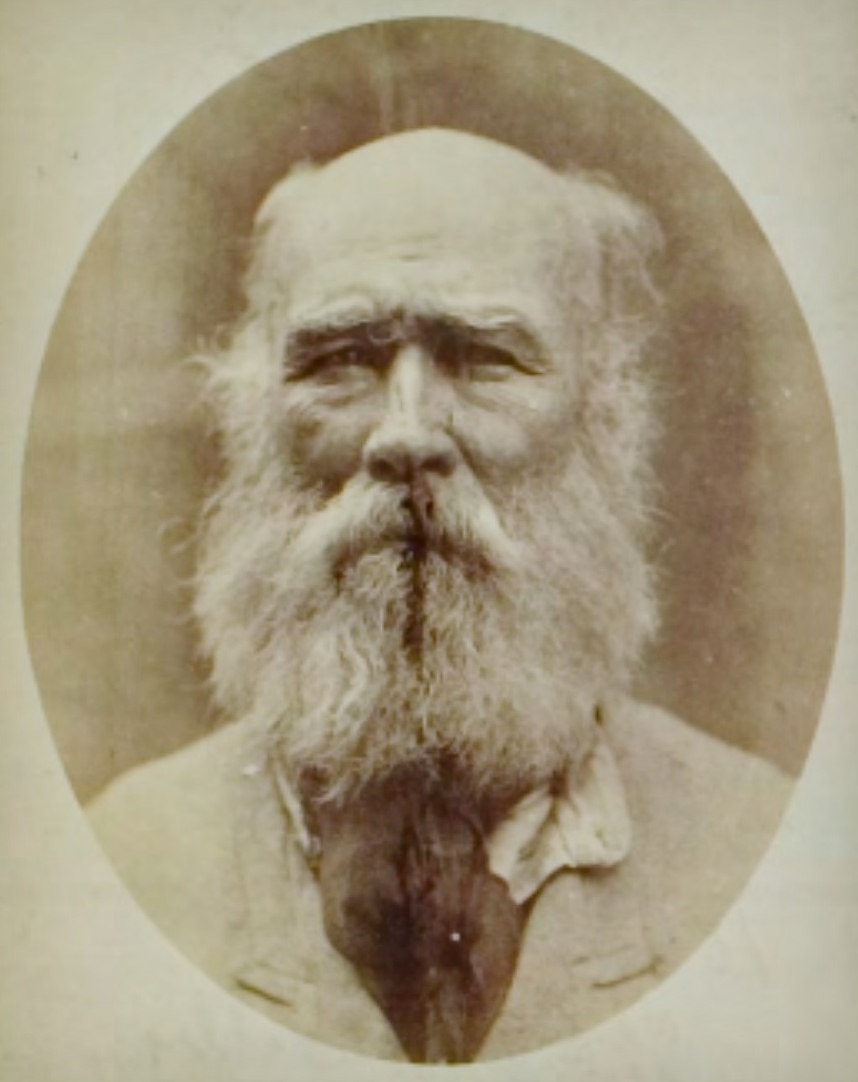
Reilly's prison photo
The article in "The Australian":- 
THE BUSHRANGING CASE AT EDENHOPE
[BY ELECTRIC TELEGRAPH.]
HAMILTON, THURSDAY.
The Court of General Sessions was opened here to-day before Acting Judge Smyth. Wm. Reilly, senior, pleaded not guilty to the charge of highway robbery at Edenhope. The prisoner, who was undefended, conducted his own case.

E. F. Hearne deposed that he was a grazier, residing at Lake Wallace, and was returning from church in a buggy with his family on Sunday morning, July 11, between 12 and 1 o'clock. On nearing prisoner's residence he saw him run into the road. He ordered witness to pull up or he would fire. He complied, and Reilly then said, "The day of reckoning has arrived ; your friends cannot save you now; and unless I obtain my rights, you will die." At the same time he demanded £300. Witness replied that he did not have so much money on him. Prisoner said, " Yon had better send to Cuik, (would be Crick) the publican, who will give you the money."

Witness asked him to send his son instead, which was done. While the lad was gone Reilly said he would take £100 down if he (witness) promised to give him £200 more on his arrival at the station. As soon as he had agreed to this, the prisoner said - "Do you see that coming down the road ; if you do not stop him, I will shoot him:" at the same time directing his attention to Constable Smith, who was riding towards the buggy. Witness beckoned him to stop, which he did. A storekeeper named Kerr then came up, and in answer to a question, said he had no money on him, but would give witness a cheque for £100. This was done, and the cheque handed to prisoner, who, after submitting it to several members of his family, said. That is all right," and put it into his pocket. Witness was then made to promise another cheque for £200, and that he would not stop the payment of the cheques at the bank or prosecute. During all this time he was covered with the gun at full cock. Mrs. Reilly and her son then proceeded with him to the station where she received the other cheque. He had bought land from prisoner at a sheriff's sale some time ago, for about £700, but there was nothing due to him.

Rose Fox, domestic servant, deposed that the prisoner bailed up the buggy, saying to Mr. Hearne, "Stop, or I will shoot you. I want my rights, and will give you five minutes to determine. If you do not give me at the end of that time £300, you and I will leave this earth to-day."

Mrs. Anne Hearne gave a recapitulation of the above facts, and further deposed that she sent her brother for the police. On Constable Smith appearing, prisoner said to Mr. Hearne, "I will soon have been off. I do not care for all the police in Victoria."

J. G. Kerr, storekeeper, deposed to giving the cheque for the £100 to Hearne, who passed it on to Reilly.

Constable Smith stated that he saw the prisoner covering Mr. Hearne with a gun, and also saw a piece of paper similar to a cheque pass from Kerr to Hearne, who gave it to Reilly. He afterwards, with Constable Balehim arrested the prisoner.

Constable Balehim also deposed to Reilly's arrest. When he got within 50 yards of his residence he saw the family run into the house, and the prisoner come out. Upon trying to open the gate, which was locked, Reilly picked up the gun and said, "If you come a foot further I fire.” After a little trouble he arrested him, and on the way to the lock up prisoner said he had stuck up Mr. Hearne in order to obtain his rights. On searching his house the gun could not be found, and Reilly refused to give up the cheques.

This was the case for the prosecution. The prisoner made a rambling statement about the injustice his wife had received in being imprisoned for no offence whatever. Ever since January 23, 1879, Mr. Hearne had carried firearms for, the purpose of shooting him. He had made at settlement with Mr. Hearne about 50 acres of land which belonged to him (Reilly) and not to that gentleman. In spite of that agreement, however, Mr. Hearne had turned his family out of their home while he (the prisoner) was in the Hamilton gaol. It was in consequence of Mr. Hearne's threats of violence that he had carried the gun when he had demanded his rights.

The judge summed up against the prisoner, pointing out that he could have proceeded both criminally and civilly against Mr. Hearne, if those allegations were true. However, that was not for the jury to decide ; they had only to consider the authenticity of the evidence, and if they believed the witnesses for the prosecution they must record a verdict of guilty against the prisoner.

The jury, without retiring, returned a verdict of guilty, and the prisoner was sentenced to three years' imprisonment.

The Court then adjourned sine die.

So William Reilly served his 3 year sentence in Hamilton, Geelong & Melbourne Gaols - and how do we know? Because now you can access some of the digitised Register of Male & Female Prisoners (1855-1947) files from PROV - there's even a photograph of an elderly looking William Reilly.


Returning to the folklore, back in October 1988 the Kowree Advocate published this article and photos on the front page. (right)

This was followed in May 1989 by another article furnishing more of the history of the now demolished cottage. (below)

Both agreed that it wasn't THE cottage - that Reilly's house was on the opposite (north side) of the main street, but it still added to the whole narrative.


So now in 2018 nearly 140 years after the events, researchers are delving into the history of the people involved.
Is the bearer of the cheque the storekeeper Kerr the same person who actually owned the Edwards/Carter cottage, and would therefore be Reilly's neighbour?
Did the Hearne family really swindle the Reilly family of their due in the land sale?
Why was the land up for a Sheriff's sale? 
Who was this man William Reilly, and when & where did he die?
Did the 'rest of the gang' (William's wife & son) also face robbery-under-arms charges?

The Edenhope Historical Society would love to hear from anyone with any information.

Tuesday, 4 September 2018

Where in the world?

Have just come across this marvellous online list “Victorian BDM Place Name Abbreviations List”

The list is comprised of place name abbreviations used in the Victorian Births, Deaths and Marriages registry indexes. It is useful for all three versions of the indexes.

The list currently contains 3,215 abbreviations, including abbreviation errors, and is a work in progress. Please be aware that every effort has been made to ensure that place names are correct to the abbreviations. Research has been done with various resources to prove a birth or death in the locality that matches each abbreviation.

Abbreviations are generally representative of a settlement, town or suburb, but can be a shire, county, parish, area, creek, river, gully, forest, hill, mountain, road, hospital, asylum, convent or ship. And includes some interesting examples – ‘A Rat Hosp’ is Ararat Hospital, 'Greg' is Gre Gre South, ‘Astrens St’ is not some obscure street in a Melbourne suburb, but the abbreviation used for the McTavish births at Ashens Station in 1859.

Shed at 'Longerenong' probably built by Donald McTavish c1860
In 1856 Donald & Jane McTavish and their family moved from Hedi (Oxley's Plains near Wangaratta) to Ashens to work as a shepherd and carpenter for Dugald McPherson. They lived at an outstation, in a shepherd’s hut at the northern tip of Taylors (Drung Drung) Lake, then part of the Ashens Run, some 5 miles from the homestead.

A week before Christmas in 1856 Jane gave birth to a frail baby boy - Donald – with the help of the station women. Then in February 1859 Jane gave birth to her 9th child – Margaret. (McTavish information from “Thy portion”). 
The Garden Shed today
Some abbreviations can represent multiple places (but at least you know the possible options) and there are also multiple abbreviations for a single place from different time periods (there are over 15 derivative abbreviations of Williamstown).
Some places no longer exist or are now known under a different name. They are indicated in the comments if known.
All in all a valuable asset if you're trawling through the BDM registers.

Thursday, 23 August 2018

Michael's Hell Ship

For more than a century and a half, a grim tale has passed down through Michael Veitch's family: the story of the “Ticonderoga”, a clipper ship that sailed on a calamitous voyage from Liverpool for Victoria in August 1852.Crammed on board in cramped, overcrowded conditions, often without sanitary facilities, fresh water and barely enough food, were 800 poor but hopeful emigrants- mostly Scottish victims of the Clearances and the potato famine. A better life, they believed, awaited them in Australia.

Three months later, a ghost ship struggled into Port Phillip Bay flying the dreaded yellow flag of contagion. On her horrific three-month long nightmare voyage, deadly typhus had erupted, killing a quarter (nearly 200) of Ticonderoga's passengers and leaving many more desperately ill. Sharks, it was said, had followed her passage as the victims were buried at sea. 
The plague-stricken sailing ship struck panic in Melbourne. Forbidden to dock at the gold-boom town, the ship was directed to a lonely beach on the far tip of the Mornington Peninsula, a place now called Ticonderoga Bay. 
The Quarantine Station administrative building
James William Henry Veitch was the ship's assistant surgeon, on his first appointment (and last) at sea. Among the volunteers who helped him tend to the sick and dying was a young woman from the island of Mull, Annie Morrison. What happened between them on that terrible voyage is a testament to human resilience, and to love.

Michael Veitch is their great-great-grandson, and the book “Hell Ship” is his brilliantly researched narrative of one of the biggest stories of its day, now all but forgotten. Broader than his own family's story, it brings to life the hardships and horrors endured by those who came by sea to seek a new life in Australia.

But there’s more...this story was repeatedly told to Michael all his young life by his own father, he has carried it and explored it all these years. 

You can hear the story directly from Michael in a performance at the Horsham Town Hall. Told with pieces of music from the era performed by Michael’s son, there will be the web of four generations of Veitch on stage. This is truly a family story.
Michael captures the human aspects in what is essentially a dark story. Even in a dying ship’s hull there is always some small thing that a wry sense of humour can find to lift us out of the putrid desolation that marks our history.
Michael Veitch’s story of the Ticonderoga delves into our Australian emigrant history, explores the themes of unimaginable courage, of family, and shines the light on a monumental, but almost forgotten, human story. This one, his own.

Upon the arrival of the “Ticonderoga” on the 22nd December 1852, a quarantine station was hastily erected at this site.  Sadly, a cemetery was also immediately required as of the 170 people that died due to Typhus Fever that engulfed the ship, 70 people were to perish upon their arrival to Port Phillip.
Heaton’s Monument marks the location of the original cemetery established at the quarantine station on Point Nepean. The cemetery was relocated inland around 1854, but the neo-Egyptian style sandstone memorial to the Ticonderoga Tragedy and to all those who endured the lengthy passage in migrant transport ships to Australia remains. 
George Heaton was the Supervisor responsible for building much of the Quarantine Station. It is believed that he built the monument at great expense to himself, in memory of the migrants who died.

DATE: 8th September 2018
TIME: 8pm
VENUE: Horsham Town Hall Theatre
DURATION: 70 minutes (no interval)
PRICE: $40 – Adult, $35 – Concession, $30 - 2018 Member, $25 - 2018 Member Concession.
Contact the Box Office on (03) 5382 9555.

Monday, 30 July 2018

The Northern Border

The start of the Black-Allan Line, in the Alps (image ABC)
The Number One border cairn (image ABC)
In a previous post, we looked at the history of the ‘Disputed Territory’ the strip of land along the Victorian-South Australian border (see the “Border clash” post)

One would think that such a dispute would be enough for Victoria, but in fact the state would later be arguing with New South Wales along the Black-Allan line – the straight line on the map between Cape Howe on the coast and the headwaters of the Murray River.

How surveyors Alexander Black and Alexander Charles Allan were set the task, and between 1870 and 1872 battled the mountainous terrain to delineate a border between the two states, has been told by ABC Radio National
Black's calculations for the border (image PROV)
Alexander Black (image PROV)
'In the wilderness of the Australian Alps the border between NSW and Victoria isn't marked out by a fence, a road, or the Murray River. It’s simply bush. And, deep inside that bush, unless you know about the Black-Allan Line, and where to find its 150 year old border cairns, it's difficult to know what state you are in. This line, the straight section of the current border between NSW and Victoria, is named after the original surveyors Alexander Black and Alexander Allan, who in 1872, mapped their way to the coast.
The line runs from the source of the Murray River to Cape Howe, on the east coast of Australia. It is still considered to be a triumph of surveying. As the result of extended legal disputes, this border was not formally ratified until 2006.
If you can find Alexander Black's number one border cairn at the start of the line, you will see it has been lovingly restored.'
Listen to the ABC podcast, and watch the short ABC video.
   
So thanks to both the ABC, and Public Record Office Victoria for access to original maps, letters and notebooks from the 1870 surveying parties.

And if you are a Geocacher there is a cache (“Black-Allan Line”) near the monument to the Black-Allan line on the highway near Genoa.

Thursday, 26 July 2018

Melbourne comes to Stawell

All images by Abandoned Melbourne
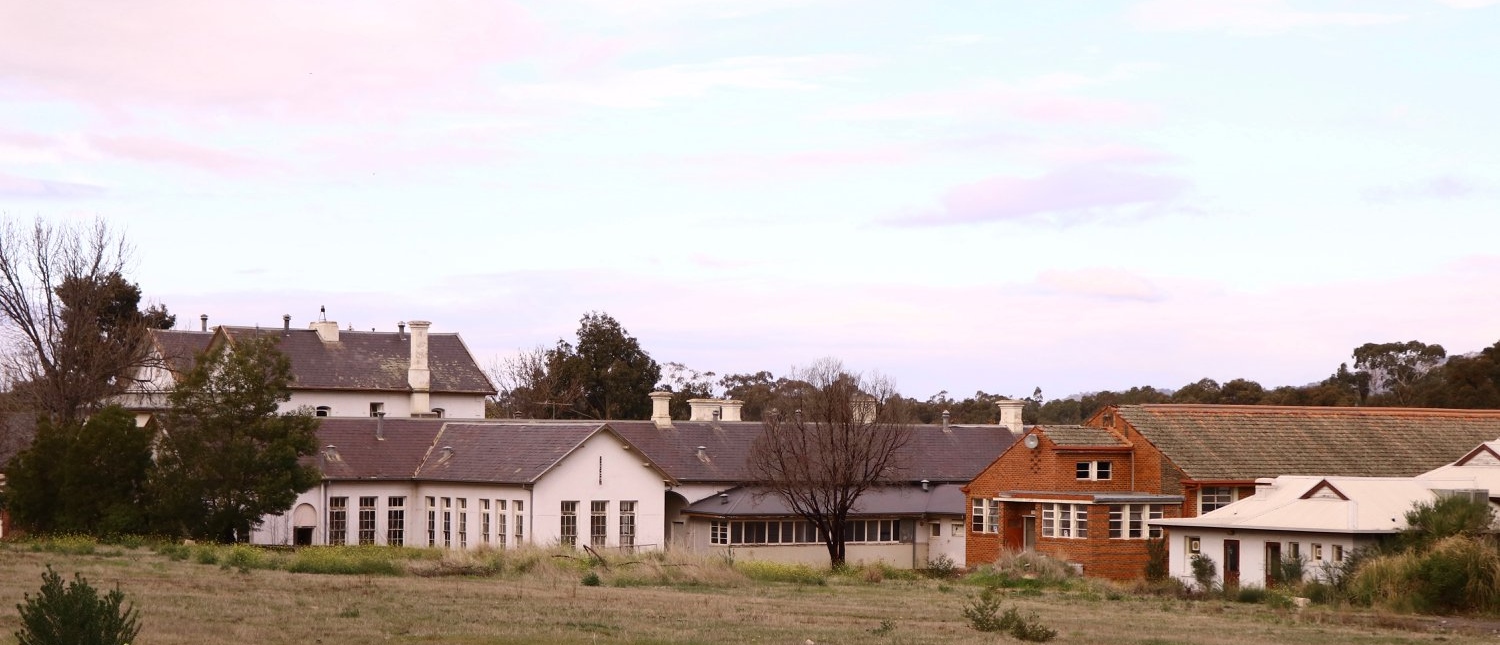
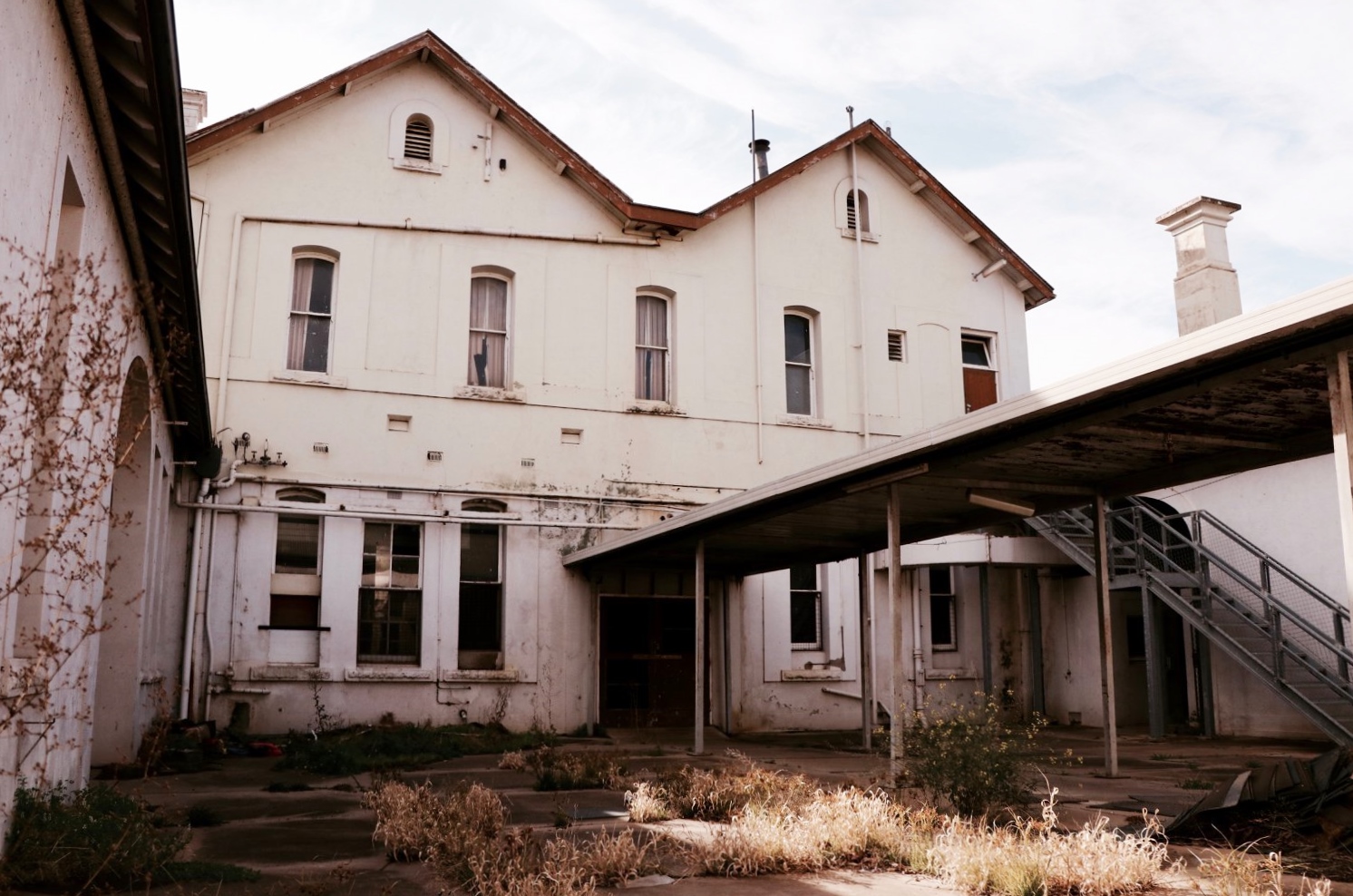
At the beginning of the month Abandoned Melbourne, (a Facebook page who visit & photograph derelict buildings & sites of general public interest, and share the images so you don't have to take the risks going to these places) obtained permission to record at Pleasant Creek in Stawell. Here are a sample of their images, and their history of the site.
Their images have created a time capsule of the site after its closure and before any re-development.
In 1861, the Pleasant Creek Hospital opened as a medical facility for the population of Stawell and district. The Syme Ward building for convalescent patients was added in 1904.
In 1933, the facility was replaced by a newly-built hospital in the town of Stawell. In 1934, the Mental Hygiene Department acquired the old Pleasant Creek Hospital site and converted it to accommodate children with disabilities, which became Pleasant Creek Special School. 
The first residents (18 boys) were admitted in 1937 from Royal Park Depot.
At the end of 1937, there were 98 children living at Pleasant Creek. In 1968 it was renamed Pleasant Creek Training Centre, caring for people with intellectual disabilities.
From the 1950s to the 1980s, there were several building developments:
1957, Lonsdale Unit expanded capacity to 113
1969, Bellfield and Fyans Units increased numbers to 196
1977, Alexandra Unit converted to recreational and lecture room facility.
1977, Day Centre, Nurses' Home and Clinical Services Administration buildings
1985, Nara Unit closed for renovations and residents moved to the previous staff living quarters.
Interior of the Lonsdale/Bellfield/Fyans unit.
During the 1980's, Pleasant Creek Training Centre housed up to 140 male and female residents, aged 10 to 45 with mild to profound levels of intellectual disability, in five residential units and four on-site houses. Services were aimed towards community repatriation. The Centre provided respite care to residents from the local community and used generic services from recreational to medical.
The Concert Hall
The Intellectually Disabled Persons' Services Act 1986 abandoned the previous ‘medical model’ that defined disabilities as illnesses, for a ‘care model’ based on the philosophy that the disabled should not be ‘warehoused’ in institutions, and care of intellectually disabled persons was reallocated to the Community Welfare Services Department.
In 1986, the Centre had about 160 residents, each client now had to be given opportunities to realise his or her full potential. General and individual service plans were created to direct each person’s development. 

In 1988, the report commissioned on Intellectual Disability Services recommended the dismantling of institutions for the disabled, to be replaced by smaller facilities. It recommended that Pleasant Creek be closed by 1993, which did not eventuate.
In 1990, an independent inquiry was ordered into allegations of sexual assault at Pleasant Creek. In response to the “Jude Wallace Report” (as it was known), Community Services Victoria and Pleasant Creek Training Centre developed mechanisms which lead to improved systems for the reporting of incidents & improved standards of service delivery.

 From 1990, Pleasant Creek provided residence, education and training facilities for 113 intellectually disabled people of varying ages from late teens to mid 50's.
In 1996, the Victorian government announced the impending closure of Pleasant Creek, in favour of 'community living' options for its residents, and the facility closed in 1999.
Thank you to Pleasant Creek for letting Abandoned Melbourne freely explore the hospital, and thanks too to Abandoned Melbourne for the visual record. Follow along on Pleasant Creek’s Facebook page to see the works being done and future dates for tours.The buildings are currently being cleaned up to be a business & tourism hub.
Then check out Abandoned Melbourne’s Facebook page, there are many more photographs on their Page, and they don’t just limit themselves to Melbourne (the Profile pic is at the Sister Rocks near Stawell).

Tuesday, 3 July 2018

Fourth of July -1918

Today, the fourth of July 2018, marks the 100th anniversary of the Battle of Hamel which was one of the most significant Australian actions of the First World War. It is well knows not only as a decisive victory, but for the contribution by Australian Lieutenant General John Monash who was commanding the Australian Corps for the first time, and it was the first occasion that United States and Australian soldiers had fought alongside one another.

Many Wimmera volunteers were amongst the more than 7,000 Allied infantry that took part (fewer than 3,000 were front-line soldiers) and were also amongst the 1,400 casualties who were either killed or wounded.
This battle was fought in and around the town of Le Hamel, (near Villers-Bretonneux & Peroone) in northern France, aiming to straighten out a bulge in the British line, and for Monash it was also an opportunity to test the tactics he believed could be used on a larger scale in future offensives.

Drawing on more than three years’ experience in wartime command, and the lessons of past successful actions by both sides, Monash devised a combined arms assault co-ordinating artillery, tanks, aircraft and infantry.


The attack was planned in intricate detail to last for 90 minutes, and the battle was a stunning success taking just 93 minutes for the Australians and Americans to achieve all their objectives. The time taken for the battle was a success in itself as many battles on the Western Front during World War One lasted much longer than planned and few achieved all the planned goals.
Along with the main action at Hamel, a diversionary attack was undertaken to the north east near the village of Ville-sur-Ancre to disguise the main attack and disrupt the ability of the Germans to counter attack.

 
Peter FitzSimons' book on the battle is available as a book or audio, while John Laffin's "The battle of Hamel"  argues that while Australian leadership was first demonstrated at Gallipoli, it came of age at Hamel.
A number of soldiers involved in the battle came from Horsham and the Wimmera. One of the volunteers who fought on this day one hundred years ago was Private Percival Roy Penglase, one of five sons of Mr Alfred Penglase of Jeparit who had enlisted and were at that time all serving in Europe.

Much of this information from the Dimboola Courier's article

Wednesday, 27 June 2018

The last stop

The first Wimmera regional Library bookmobile
The bookmobile was officially opened in Birchip and Donald on 22nd June 1967 by the State Librarian Mr Kenneth A.R. Horn.
The Official Opening
The mobile started operation in July 1967, in the shires of Birchip, Donald and Karkarooc, covering an area of 3,331 square miles. It travelled up to stops at Patchewollock in Karkarooc, and Watchupga in Birchip Shire.
The class of 1968 at Donald Primary School
 In 1984, Birchip changed from a Mobile site to a joint-use branch library at the Birchip P-12 College, with Margaret Glen and Andrew Rossner working together.
The Mobile at Donald Primary
The vehicle was a Bedford TK KEL 3D. It carried 3,500 books. The first operator/driver was Mr Jack Klowss, he was on the road from Tuesday to Saturday, staying away 3 nights a week.
Jack Klowss on the mobile
Move forward 50 odd years, and the Mobile Library is making its final visit to Donald. After 3 new vehicles and even more operator/drivers, Paul will drive up Woods Street and park outside the Post Office for the last time tomorrow.
The Bedford parked outside the Donald Post Office site

Friday, 22 June 2018

Butter factory spreads

Back in July 1893, the Horsham Town Hall was the venue for a meeting calling for the establishment of a shareholder butter factory in Horsham.
Following the promise of milk from 300 cows, cream from a Natimuk factory, and Burnt Creek and Green Lake district support for the supply of cream, the dream was realised.
On 11th October 1894 the Horsham Butter Factory was officially opened by the Mayor Cr W.F. Osborn. Built for £1,350 a “commodious, sightly and highly convenient building” was erected on the corner of Hillary and Urquhart Streets.
As a butter factory, milk arrived in cans on suppliers’ carts, it was hoisted to the upper storey, weighed, and run into a large receiving tank. The milk was then conveyed to the separator for the cream and buttermilk (the buttermilk was pumped by centrifugal pump to tanks at the rear of the building for sale or return to suppliers). The cream went to a large Cherry churn, where salt was added, then it was washed and pressed into pats. The factory’s power came from a Tangye vertical engine.
The Opening ended with 3 rousing cheers for the Horsham Butter Factory.
Move on many years and diary and butter production has declined across the region, and the factory building becomes the Horsham Italian Social Club. In the post war years the building was a centre for many migrant Italian families. About 120 families were involved with the club at its peak. The building was important for the Italian community who migrated to the Wimmera in the 1970s and 1980s.Members of the Italian community would come together to play cards and socialise, but now many have passed on or moved away. The building was used for weddings, birthday parties and other functions.
Now, the property includes a large building with a formal entrance that leads to a hall. The building has a commercial-grade kitchen, bar and restrooms. And the Club felt that the time had come to sell the building and to donate the money from the property’s sale to charity.
From Wimmera Mail Times: Former Horsham Italian Club treasurer Lorenzo Manserra Photo: Elijah Macchia
On 20th April the building went to auction, and in negotiations afterwards it was revealed that the Horsham Table Tennis Association has found a new home.
After years of searching for a permanent place and playing out of the Maydale Pavilion at the Showgrounds, the Association has purchased the building, for an undisclosed price.
The Association’s president Leon Forrest said the purchase was a big move forward in helping grow the association’s numbers and viability, as it had grown out of the facilities at the Maydale Pavilion.
 “We want the place to be for the community. We cover all age groups, from juniors to seniors, and we want to provide a hub for enjoyment.”
“The place will be used for our tournaments, think seven to eight tables can fit in. The dance studio currently uses the building, but they are looking at other options for what the space could be used for, eg. other community clubs that want to hire or rent it.
The Association are holding a Community Open Day on Sunday 24th from 2pm to 4pm.
So the Butter Factory gets another lease on life.